This bollywood movie is about girl who is still living in a very patriarchal household and society in Delhi, India. There is a contrast between her ideals, and the city bustling around her. A day before her wedding, she gets broken up with. Having been looking forward to her honeymoon trip, she decides to go on the trip alone since she already had the tickets.
The movie shows a very interesting journey of this girl who had no exposure in her life, taking such a massive step and going on this literal/physical journey alone, suddenly in a new world unfamiliar to her after heartbreak. We see her go to places she wanted to with her fiancé alone, but surprisingly she starts to find her own confidence and journey because of this. As the audience we expect her to find love or go back to her ex, but she never does. She makes friends, gets more confident, changes her wardrobe. Instead of a big overnight transition, her journey happens slowly. She still wears traditional prints, now mixed with modern cuts – the movie uses fashion to portray her emotional journey, which is a treat to watch.
We see her react and act within her inbuilt patriarchal notions, and when her ex finally does come back, we see what it looks like for a self-confident and now ‘modern’ woman to respect herself while still living in the same society.
The film works because it is an accurate portrayal of modern patriarchy. A kind of heteronormativity that exists in connection with now old ideas. Without giving too many spoilers, this movie was an amazing watch. And the transition Rani (‘Queen’ in Hindi) has is so refreshing – no sudden transitions or disrespect, but the story of a woman slowly finding herself without losing her core values.
I see a lot of intersectionality play out in fan fictions, particularly ones where the media does not have any inbuilt. Harry Potter has had a cult following around the world, while its author has faced several allegations of being racist, homophobic and transphobic. As a result, the fandom which has loved the work for decades, decided to take matter into their own hands.
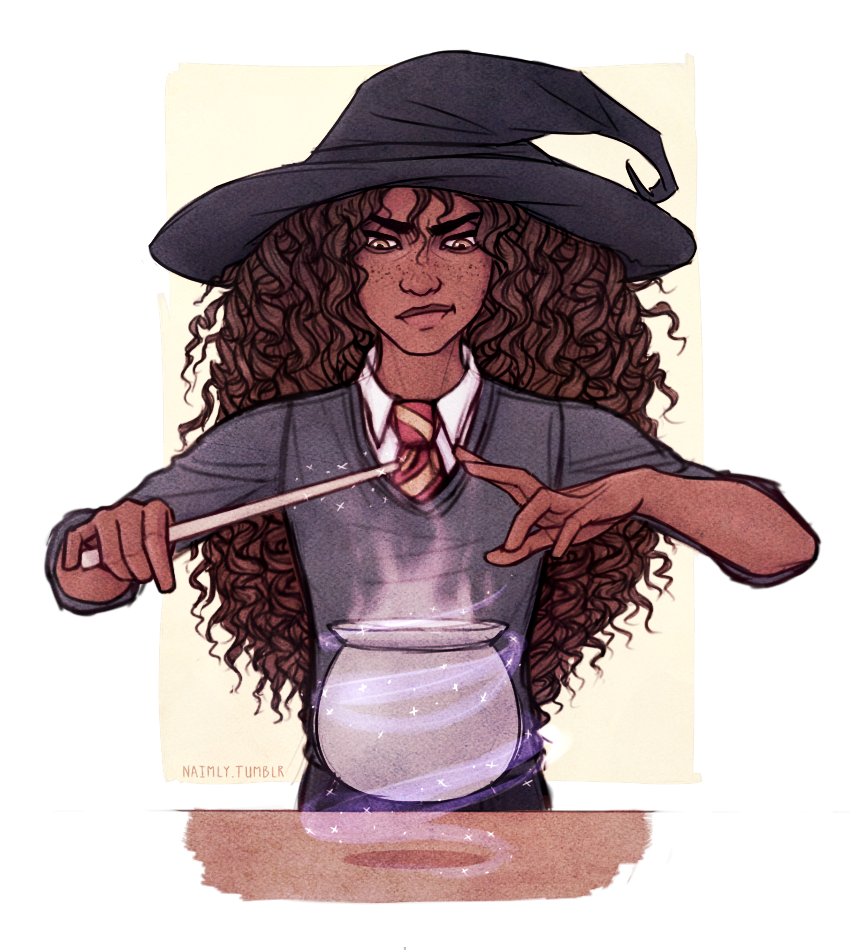
Not only are characters read as queer or gay, but also perceived to be different races. One of the main characters is Hermione Granger, who grew up in London and is characterised to have frizzy long hair. People decided to portray her as a Black character, as her roots and characterisation would fit this character image. Additionally, it was not specified in the books that she wasn’t, and that made it easier to see her in this light.
This fandom and queer reading has really spread. Multiple queer readings of characters in the series are seen in the top 10 of fanfics on AO3. Wide acceptance of intersectional readings spread into more canon depictions as well. When Cursed Child came out, the first Broadway production of this show even cast a black actress as Hermione.
There is a relationships fans have with such works, where a fandom pressure can bring representation to original works and how they are perceived.
Although having original representations is important, there is something to be said about reading queerness into such well known works, and then having them being made canon!
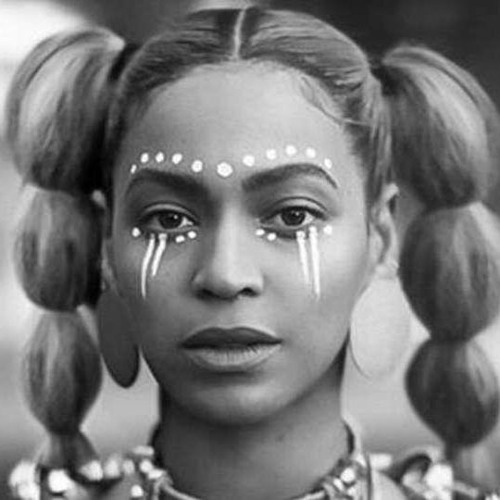
The video starts with empty parking garage, empty football field. A girl with white hair stand facing the empty field. It cuts to Beyonce lying on a football field, white dress, frizzy wild hair with bleached ends, looking down. The dialogue begins and the shot is black and white, she is walking down the parking in what looks like a wedding dress, talking about how “he” bathes her until she forgets “their” names and faces. Jump cuts to her in a gym boxing, and then to a dark scene with a woman walking on a terrace. The word “reformation” comes on the screen, and it looks like an old-timey shot — the long skirt, b&w shot, etc. It cuts back to Beyonce who is lying in bed with a bonnet in her hair. After a few more shots back and forth, the scene becomes coloured again. We look at trees from under, see their flowers dangling. The sea is shown, women walk in a line, the water upto their ankles. They wear sheer garments — white-pink dresses, half soaked, and their legs can be seen through this covering. The water moves as they walk. They are all black women, with Beyonce at the head of the line. They all have braids and some sort of black or associated hairstyle, such as dreadlocks. You can see Beyonce in a shot, her gaze unfocused with the sun shining behind her. The women wear white with black stripes in the middle, and act like a group. They hold hands as they face the sea, all in a line. It soon cuts to Beyonce on a chair that is lying down, on a sort of platform. It looks like she is sitting on the chair, but the chair and her are lying with their backs on the floor. Flowers surround this platform. “You and me could calm a war down” plays at the back.
I write about this scene because before this class, I did not realise how much history was behind it. It was shot in Igbo, where the Igbo Landing of 1803 occurred. This was a scene of mass suicides to resist enslavement. At least 10 Igbo died, which was highlighted int he music video by showing the 10 women walking next to the shoreline. A scene at the end of the video showed Beyonce dressed as an Igbo woman, which was a direct reach into history to bring it to life. Her music video brought this oral history into mainstream attention. The water, specifically the water spirit, plays an important role in Igbo beliefs and cultures, and has been highlighted in the video.
As someone who doesn’t have this knowledge or history, I think it is a really big step to show it on such a big platform. That being said, I wish I had more information about this event, that I don’t think was given through the piece of media. Most news channels interpreted it form a music lens, and it was mostly the comments on the Youtube video that informed people of this history. I can see the message being exponentially more impactful had there been more information given at the end, instead of being left to interpretation. However, it is still a huge step for it to be displayed on such a platform, and I would be curious to learn more about it.
I do want to acknowledge my positionality in this — I am not black nor do I know as much about Black history as I would like to. This interpretation came from some research into the topic, but if anyone has more knowledge, please reach out or comment on this post because I would love to hear from you.
A scene that stood out to be in English television was the Bridgerton rendition of Indian wedding rituals. The show is set in old England, and it pleasantly surprised me that they have characters from India in their show. Particularly because of colonisation, a lot of people did move to England and beyond, so it would make sense to have this be part of the diversity in the show. It seemed natural and expected, rather than diversity being forced into a storyline where it doesn’t belong.
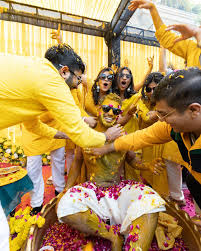
This part of the show has an Indian character engaged to the son of an old English family. This character, her sister and an older woman are taking part in a traditional Indian wedding ritual, called the Haldi ceremony. The background score is an instrumental version of a 90s bollywood song. The scene begins with traditional looking dishes in which someone is mixing turmeric and other ingredients for the ceremony. The background song has been remastered by using English instruments (like violins) for the Hindi song. There is a lot of yellow in the scene — from the clothes, to the marigolds, which are accurate for the traditional ceremony. Instead of Indian wear, the characters are wearing English-style dresses, and speak in a British accent. The ceremony only has three people, and seems to be taking place in the evening — which is unusual for this tradition. As are the candles that are lit in the back. The characters are discussing the upcoming nuptials. Apparently, the groom has pushed the wedding up, and the bride is nervous for it. She says that it is a clear sign of affection, but it has unnerved her. The women around her try to calm her down, as they apply turmeric on her arms. Their chats involve discussion about who the haldi is applied to and its significance — that the recipient finds a groom worthy of her — and the little sister (the bride) applies the paste to her older sister’s arms as well.
Instead of sunlight, bright outdoors, and a family-centred event, this one seems to be directed from a western perspective. It touches the values of the community briefly, but doesn’t take the time to delve deeper into why those customs are in place. While the storyline explains that the sisters are estranged from their grandparents, it seems strange to see no family at the wedding. Especially because Indian families are large, and everyone is invited to weddings — where the customs are primarily centred around bringing the family and friends together. Additionally, this ceremony would not take place in candlelight, but in the outdoors under the sun, or at least on a terrace and around tons of festivity. Showing Indian customs without the traditional outfits seems like an odd choice as well — if the sisters are tied to their roots enough to partake in this ceremony, why would the costume department not take more time and effort to give them appropriate traditional wear, especially for the time period they are in? Rather than traditional folk songs, the background is also an instrumental version of a popular song from 90s bollywood cinema. While the show does a good job of introducing these fleshed out characters and backstories, I wish more effort had been put into integrating their culture in this time period as well. The elements are superficially there, but not enough to make the ceremony believable or accurate for the population that resonates with this culture. There is a sense of exoticism of the characters’ backgrounds, but not an understanding. They are diverse at first glance, but their conversations, interpersonal dynamics, and even the visual elements of the scene are a westernised version of their culture.
Coming to gender dynamics, I am not surprised by the over representation of women in the scene. Especially in older times, there might be a difference in which gender attends which ceremony, and at times there might be a strict gender binary present. As the main characters, the women are depicted as beautiful, thoughtful and caring. I presume that the intended audience for this scene is the people in the Indian subcontinent, so I do wish there was more care taken to make the ceremony as accurate as possible, rather than a western product that only serves an exotic idea of the custom. As someone who is of the subcontinent, I am glad that there is an organic representation of this community in English media. However, I think we have a long way to go before the characters are shown as products of their time with appropriate depth, and the customs seem accurate to the time period and beliefs.