Categories
Uncategorized

Playing the Victim Card: Signs and Satire in Adults on Hulu

FX’s Adults on Hulu follows a group of chaotic young adults living in Queens, crashing at a friend’s parents’ house and trying to fend for themselves. In the pilot episode, an old friend named Kyle goes viral on social media after coming forward about an experience of sexual harassment at work. His post launches him into unexpected visibility as an activist figure. Rather than responding with concern or solidarity, Issa, one of the show’s central characters, becomes visibly jealous of the attention he’s receiving and attempts to insert herself into his newfound movement. Issa shows up at a rally Kyle is hosting and asks if he wants someone else to speak on stage. He declines, flashing a literal “victim card” and explaining that she would need “one of these guys” to get through.

In response, Issa pulls out her own stack of identity-based cards: her woman card, her child-of-immigrants card, and her sex-worker card (she reads horoscopes on OnlyFans), and she convinces him to let her pass the fence and get on the stage. 

There’s a lot to unpack here. At its surface, the scene touches on a serious and emotionally charged topic: sexual harassment. Yet the tone is unapologetically comedic and irreverent. The fact that the primary response from Issa and her friends is not sympathy, but envy, highlights the show’s willingness to satirize the culture of social capital around activism and trauma. The absurdity of the moment in which she uses the cards as credentials to justify her place in the protest makes it clear that the show is poking fun at her and at the situation in general. 

By literalizing the idiom “playing the victim card,” the show cleverly plays with language and symbolism. The phrase typically carries a pejorative implication — that someone is using their suffering or marginalization for strategic gain — and by turning that metaphor into a physical object, the show foregrounds the transactional dynamics that can emerge in social justice discourse. The signifier — the “card” — is made absurdly concrete, but the signified — the social function of identity-based legitimacy — remains intact. The joke works because the audience already understands the real-world logic being parodied.

The moment raises questions about how identity is used as a form of access and authority. Issa’s eagerness to present her marginalized identities as qualifying credentials plays into a critique of the perceived “oppression Olympics,” where social power is recalibrated based on whose trauma is deemed most valid. The scene mocks performative allyship and attention-seeking behavior in activist spaces. Ultimately, Adults uses this scene to highlight the absurdity of commodifying identity and victimhood, particularly in online and performative activism. The humor is biting, and the show doesn’t attempt to offer any moral answers, but it highlights the messiness of how trauma, identity, and social recognition are negotiated in these spaces.
Categories
Uncategorized

Sex Education and The Politics of Talking About Sex

In “Sex in Public,” Berlant and Warner argue that a key component of heteronormativity is the cultural insistence that sex and intimacy belong solely in the private, domestic sphere. While public institutions mediate sexual behavior in many ways, actual explicit discussions of sexuality are presented as abnormal. With no outlet for healthy discourse, people are made to believe “that they are individually responsible for the rages, instabilities, ambivalences, and failures they experience in their intimate lives, while the fractures of the contemporary United States shame and sabotage them everywhere” (p. 557).

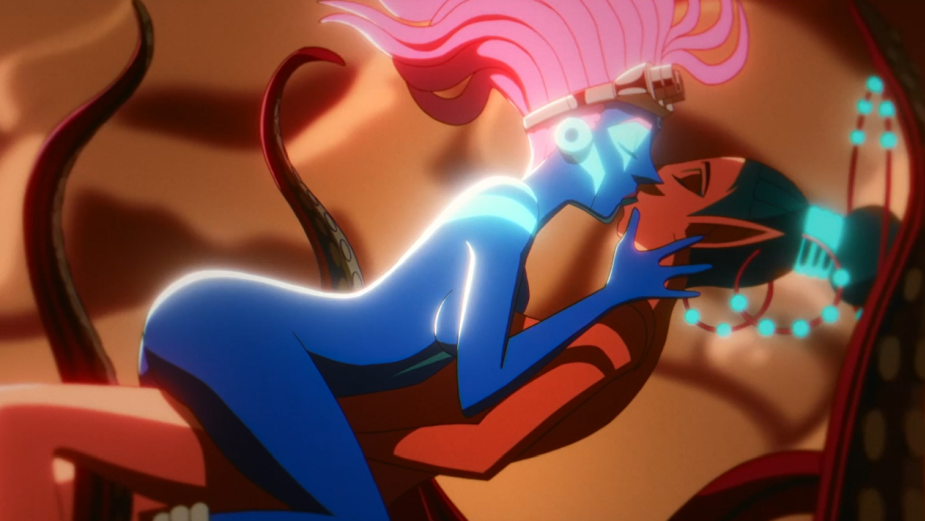
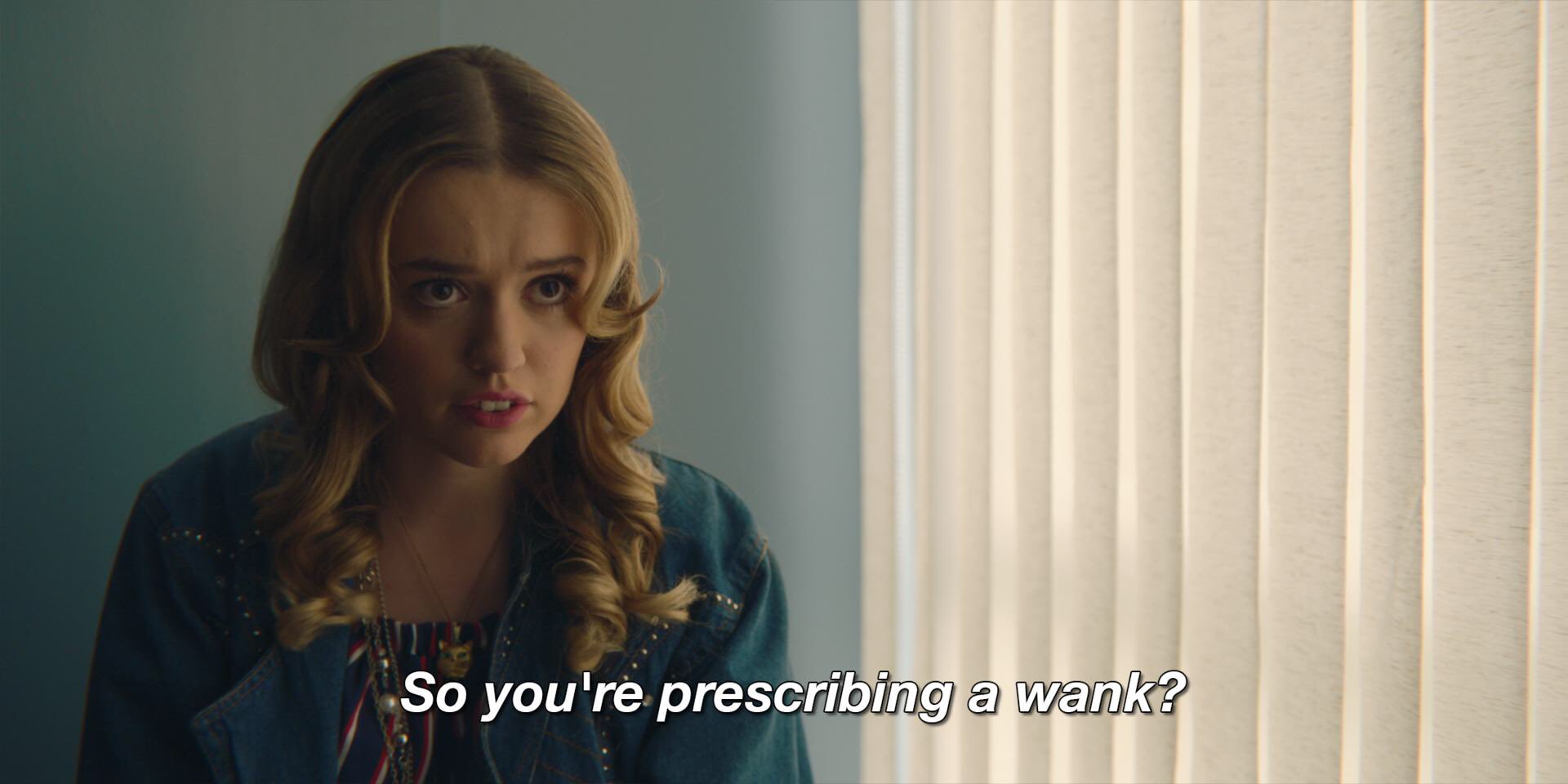
While Berlant and Warner’s argument is still compelling in a contemporary context, a significant amount of media that portrays and discusses a variety of sexual behavior has been released since “Sex in Public” was published in 1998. TV shows like Sex Education (first released in 2019), Sex Lives of College Girls (2021), and Heartbreak High (2022) all take on the task of trying to unpack the sexual lives and practices of teenagers and young adults. Sex Education, in particular, is centered around a high schooler named Otis, whose mother is a sex therapist. Otis starts a business at school where people pay him for sex and relationship advice. Under this premise, the show creates numerous opportunities to discuss a range of sexual “failures.” While many characters express embarrassment or shame around these issues, the general portrayal normalizes varied sexual preferences and difficulties. 

Lily’s alien sex fantasy (Sex Education, Season 3 Episode 7)

sex education on X: "https://t.co/r8HIzgQVf1" / X
Netflix's 'Sex Education' Star Aimee Lou Wood On Masturbation Scene That  Changed Her Life | body+soul

Aimee tries to figure out what she enjoys sexually (Season 1 Episode 6)

Sex Education offers representation of queer behaviors that viewers might not often see in other media. But perhaps more importantly, Sex Education gives examples of how to discuss sex and desire openly. By representing both the practices and the discourse around those practices, Sex Education can inspire viewers to engage in their own conversations about sex. Sex Education is not perfect by any means (can any representation really be perfect anyway?). Yet, in many ways, it is a kind of queer counterpublic, or perhaps a doorway to a counterpublic, in that it counters “the way a hegemonic public has founded itself by a privatization of sex and the sexualization of private personhood” (p. 559). The more we discuss sex openly and shamelessly, the more opportunities we have to confront the public institutions that govern it while simultaneously preaching privacy. Media like Sex Education is a nudge in the right direction. 

Categories
Uncategorized

Objecthood and Temporality in “Pray You Catch Me”

In Beyonce’s “Pray You Catch Me” music video, she employs what McMillan describes as “temporal ambiguity.” The video weaves together clips in black and white and in color. The 19th-century fashion, tunnel shot, and southern setting all suggest a reference to slavery, but these are all meshed in with contemporary elements, blurring the temporal boundaries of the narrative.

By blurring past and present, Beyonce is able to capture how, as McMillan writes, “what has come before is not contained in the past, but is continually erupting.” Beyonce’s video highlights how Black history and Black grief inform present-day experiences of Black womanhood. In the poetry voice-over, Beyonce says, “you remind me of my father… in the tradition of men in my blood you come home at 3am and lie to me. What are you hiding? The past and the future merge to meet us here. What luck, what a fucking curse.” She draws parallels between her experience of adultery and generations of Black trauma. The emotional affect of both experiences comes through in the way the subjects in the video are depicted. 

Read through McMillan’s framework, the women in the video can be seen as both objects and agents. Their white formal attire contrasts with the setting which could have once been a plantation with Black slaves. In this sense, it is a reclamation of space and power. Yet, the women appear stuck, they don’t speak or move, and their expressions are solemn. In their statue-like nature, they are objects. This intentional performance of objecthood (in McMillan’s terms) draws attention to the tension between oppression and subjectivity, trauma and reclamation/redemption. Like Beyonce, stuck between love and deceit, hurt and forgiveness, the women in the video occupy a liminal space. In one striking clip, a woman rocks on the porch, her face obscured by a leaf. Her pose is comfortable and powerful, yet her gaze is blocked. Is she hidden or hiding? I’d argue both – or maybe neither.

It is in this elusive portrayal that I really understand the application of McMillan’s avatar. She is abstract and atemporal, but her affect is palpable, almost tangible. Like the rest of Lemonade, she offers a beautiful exploration of the messiness of pain, pleasure, power, love, and oppression. 

Categories
Uncategorized

Sexual Deviance and Fetish in Season 3 of The White Lotus

Season 3 of The White Lotus, like seasons 1 and 2, portrays the vacation stay of an eclectic cast of resort guests that ultimately ends in a murder. The show is dark and satirical, and the characters are wealthy and generally unlikeable. In episode 5, Rick goes to Bangkok on a quest to avenge his dead father, and meets up with an old friend Frank, who he’s asked to bring him a gun. While the two catch up at a dimly lit bar, Frank goes on a crazy monologue about his journey to sobriety and celibacy. He tells Rick that he moved to Bangkok because he “always had a thing for Asian girls.” When he first moved, he was partying and having sex constantly and “was out of control.”

I started wondering, where am I going with this? Why do I feel this need to fսck all these women? What is desire? The form of this cute Asian girl, why does it have such a grip on me? ‘Cause she’s the opposite of me? She gonna complete me in some way? I realized that I could fսck a million women, I’d still never be satisfied. Maybe… Maybe what I really want, is to be one of these Asian girls.”

He proceeds to tell Rick in detail about how he explored sex with men (“white guy, my age”) while role playing as one of the “Asian girls.” Periodically throughout the monologue, the camera pans to Rick, who looks perplexed, and mildly disgusted. The show’s core eerie leitmotif builds in the background. At the end, he explains that he got into Buddhism and became sober and celibate.


Frank, like most of the cast, is generally not a character that the audience is meant to like. He’s wealthy and slimy and it’s implied that he used to be a hit man. As he speaks, the music imbues a sense of dread, and even Rick, who’s also a sleazy character, seems aghast at his monologue. In this sense, the show can be read as critical of Frank’s blatant fetishization and objectification of Asian women. However, the topic is not ever explicitly addressed or criticized, and Frank doesn’t appear in any other episodes. While race, class, and sex are all key themes in The White Lotus, with the show making a clear critique of the character’s privilege and ignorance, it’s often unclear how the viewer is meant to interpret the depictions of sexual deviance. The season also includes a portrayal of incest and references to voyueristic fantasies, all of which involve characters who are obnoxious and cruel. Are we meant to judge them for their sexual desires? Or simply see the hypocrisy in the way that they remain rigidly adherent to other gender and sexual norms? Frank’s monologue is the show’s only mention of cross-dressing or gender nonconformity, and it only appears accompanied by racist and misogynistic dialogue. TERFs online have labelled Frank as autogynephilic, and have claimed this scene as evidence that trans women are all just men with deviant sexual fetishes. While this interpretation is misinformed and bigoted, it does highlight that in many ways, The White Lotus representation of sexual nonconformity falls flat. It adds intrigue and shock factor, while skimping on any opportunity for a more nuanced or radical discussion of the subject matter.