
A scene that stood out to be in English television was the Bridgerton rendition of Indian wedding rituals. The show is set in old England, and it pleasantly surprised me that they have characters from India in their show. Particularly because of colonisation, a lot of people did move to England and beyond, so it would make sense to have this be part of the diversity in the show. It seemed natural and expected, rather than diversity being forced into a storyline where it doesn’t belong.
This part of the show has an Indian character engaged to the son of an old English family. This character, her sister and an older woman are taking part in a traditional Indian wedding ritual, called the Haldi ceremony. The background score is an instrumental version of a 90s bollywood song. The scene begins with traditional looking dishes in which someone is mixing turmeric and other ingredients for the ceremony. The background song has been remastered by using English instruments (like violins) for the Hindi song. There is a lot of yellow in the scene — from the clothes, to the marigolds, which are accurate for the traditional ceremony. Instead of Indian wear, the characters are wearing English-style dresses, and speak in a British accent. The ceremony only has three people, and seems to be taking place in the evening — which is unusual for this tradition. As are the candles that are lit in the back. The characters are discussing the upcoming nuptials. Apparently, the groom has pushed the wedding up, and the bride is nervous for it. She says that it is a clear sign of affection, but it has unnerved her. The women around her try to calm her down, as they apply turmeric on her arms. Their chats involve discussion about who the haldi is applied to and its significance — that the recipient finds a groom worthy of her — and the little sister (the bride) applies the paste to her older sister’s arms as well.

Instead of sunlight, bright outdoors, and a family-centred event, this one seems to be directed from a western perspective. It touches the values of the community briefly, but doesn’t take the time to delve deeper into why those customs are in place. While the storyline explains that the sisters are estranged from their grandparents, it seems strange to see no family at the wedding. Especially because Indian families are large, and everyone is invited to weddings — where the customs are primarily centred around bringing the family and friends together. Additionally, this ceremony would not take place in candlelight, but in the outdoors under the sun, or at least on a terrace and around tons of festivity. Showing Indian customs without the traditional outfits seems like an odd choice as well — if the sisters are tied to their roots enough to partake in this ceremony, why would the costume department not take more time and effort to give them appropriate traditional wear, especially for the time period they are in? Rather than traditional folk songs, the background is also an instrumental version of a popular song from 90s bollywood cinema. While the show does a good job of introducing these fleshed out characters and backstories, I wish more effort had been put into integrating their culture in this time period as well. The elements are superficially there, but not enough to make the ceremony believable or accurate for the population that resonates with this culture. There is a sense of exoticism of the characters’ backgrounds, but not an understanding. They are diverse at first glance, but their conversations, interpersonal dynamics, and even the visual elements of the scene are a westernised version of their culture.

Coming to gender dynamics, I am not surprised by the over representation of women in the scene. Especially in older times, there might be a difference in which gender attends which ceremony, and at times there might be a strict gender binary present. As the main characters, the women are depicted as beautiful, thoughtful and caring. I presume that the intended audience for this scene is the people in the Indian subcontinent, so I do wish there was more care taken to make the ceremony as accurate as possible, rather than a western product that only serves an exotic idea of the custom. As someone who is of the subcontinent, I am glad that there is an organic representation of this community in English media. However, I think we have a long way to go before the characters are shown as products of their time with appropriate depth, and the customs seem accurate to the time period and beliefs.
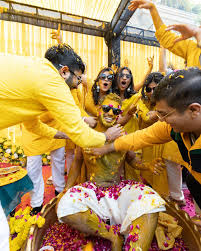
Some pictures from actual Haldi ceremonies:

One reply on “Bridgerton’s Haldi Ceremony and Bollywood”
Malvika, you’ve brought such insight to this scene! I think it is so hard to balance our immediate reactions to the lack of authenticity of this tradition, while also feeling like we have to appreciate the show for merely making an effort to represent even the slightest amount of diversity. I’m thinking too of our conversation today about avatars, objecthood, and the BIPOC female spectator. For a particular audience (from the Indian subcontinent), there might be a sense of cognitive dissonance seeing yourself represented onscreen, yet, also recognizing that those characters aren’t true depictions of you or your culture (and then, making an effort to self-embody that avatar in order to “not be hurt by the absence of [brown] female presence”) (hooks 213). It’s sad to think that more than thirty years after bell hooks published her piece on the oppositional gaze, the concept of being denied a pleasurable cinematic experience still rings true for women of color today.