In 2026, professional women’s baseball will return to the United States for the first time since the World War II–era All-American Girls Professional Baseball League (AAGPBL). The Women’s Professional Baseball League (WPBL) is more than a nostalgic revival—it marks a pivotal cultural moment to rethink who belongs in sports, how identities are expressed, and what true visibility means.
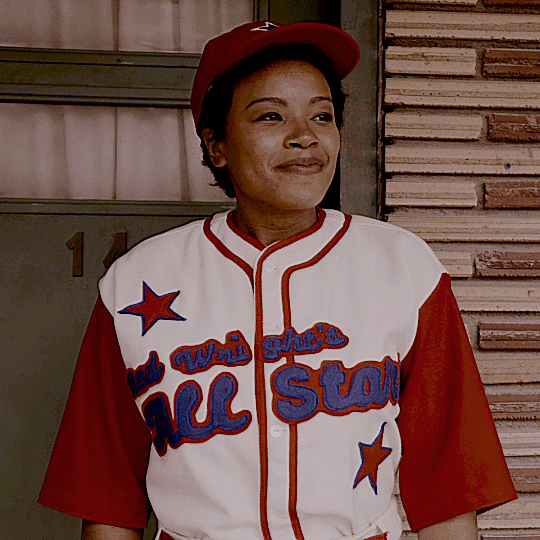
For decades, women’s baseball was erased or sidelined. The 1992 film A League of Their Own gave us a beloved but simplified story, largely overlooking the complex intersections of race, gender, and sexuality. The recent Amazon Prime reboot pushes beyond nostalgia, centering queer and BIPOC experiences that have long been excluded from baseball’s history. While characters like Max Chapman—a Black, gender-nonconforming, lesbian pitcher—and their transmasculine Uncle Bert remain supporting figures, their stories bring crucial visibility to the layered identities navigating the sport.
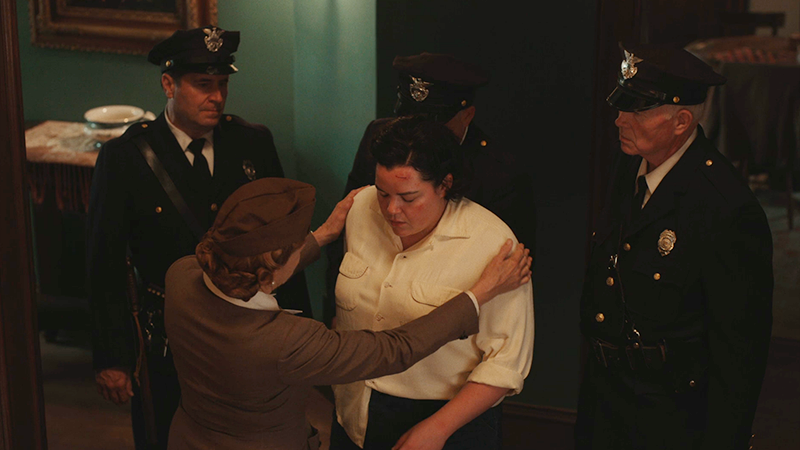
The show also honors the Negro Leagues, weaving Black baseball history into the narrative and underscoring that baseball’s story is inseparable from America’s ongoing racial realities. It doesn’t shy away from systemic oppression, depicting police brutality during a raid on an underground speakeasy and contrasting it with a Black queer house party held out by the train tracks—in a neighborhood neglected by law enforcement—reminding us that sports exist within broader social struggles.
A recurring motif is the players’ fraught relationship with gender norms and appearance. Players are fined for wearing pants in public and trade creative methods—like using ration cards to buy boxer briefs under the guise of purchasing for a brother—as small acts of rebellion against rigid expectations. This tension extends to the AAGPBL’s strict emphasis on femininity: the league made significant investments to ensure players appeared stereotypically feminine, enforcing rules on makeup, hairstyles, and playing in skirts. The show includes candid reflections from players grappling with these contradictions—athletes forced to perform toughness on the field while conforming to delicate societal ideals of femininity.
The series also honors quieter legacies, like Maybelle Blair, an AAGPBL player who courageously came out as a lesbian at age 95. Blair’s story highlights the historic invisibility of queer athletes and challenges us to acknowledge those who paved the way without recognition.
In stark contrast, men’s professional baseball has seen only three openly queer MLB players—and all came out post-retirement. The WPBL’s launch offers a bold alternative: a league where queer athletes are not exceptions but woven into the fabric from the start.
To grasp the WPBL’s transformative potential, it helps to think in terms of assemblage—the way race, gender, sexuality, history, culture, and social forces dynamically intertwine. Women’s baseball is shaped by this complex interplay: gendered uniforms, coded queer communities, racial exclusion, and ongoing struggles for visibility. The WPBL can create a space where queer, trans, nonbinary, disabled, and BIPOC athletes’ identities are not sidelined but central to the league’s identity.
This vision aligns powerfully with José Esteban Muñoz’s concept of queerness as utopia—a future-oriented horizon that doesn’t yet exist but offers hope and possibility. Queerness here is not about present perfection but about moving toward a world where all forms of gender and identity coexist without conflict or erasure. The WPBL doesn’t have to be flawless at the start, but it can be a vital step toward a future where athleticism and gender expression are celebrated together.
What happens when you mix a Marvel icon, an angry white woman, and Idris Elba? Saturday Night Live’s “Impossible Hulk” sketch answers that question with a satirical punchline that doubles as cultural critique. In this parody, Idris Elba plays a scientist who, after a failed gamma radiation experiment in his lab above a Tory Burch, when made angry, doesn’t transform into a green rage monster—but into a “Karen”: a privileged white woman who weaponizes tears, demands to speak to managers, and destroys lives with one phone call.
At first glance, it’s a classic comedy sketch. But as our class readings remind us, pop culture is never “just” entertainment. It’s a complex field of signs, symbols, and ideologies—a place where resistance, reinforcement, and reimagination are constantly at play. Let’s break it down using the frameworks we’ve been engaging in class.
Pop Culture Matters—Even When It’s Funny
In Pop and Circumstance, Zisler argues that pop culture is not frivolous; it’s a vital space where meanings are made and contested. The “Impossible Hulk” is a sharp example of this. On the surface, it pokes fun at white entitlement. But zoom in, and it becomes a powerful semiotic text: one where signs (the “Karen”), signifiers (the haircut, the voice, the rage), and signifieds (racial privilege, systemic racism, performative victimhood) are all working overtime.
One of the most striking dimensions of the “Impossible Hulk” is how it frames the transformation into a “Karen” not just as a survival tactic, but as a critique of how white femininity can be mobilized as an active tool of domination. The figure of the “Karen”—a middle-class white woman who uses her social position to control or punish others, especially people of color—is not merely an innocent byproduct of structural privilege. She’s a symbol of how that privilege can be weaponized.
A key scene in the sketch dramatizes this dynamic perfectly. Elba’s character, a calm, rational Black man, attempts to resolve a simple customer service issue. But his presence alone escalates the interaction—security is called, assumptions are made, and suddenly, the environment treats him as a threat. Here, the sketch draws on semiotic theory: while the behavior is neutral, the signified meaning attached to a Black man in a moment of disagreement is read as dangerous. As Sandoval and other theorists of semiotics remind us, ideology works most insidiously when it feels “natural.” In this case, the customer service worker’s fear is not based on action, but on a set of deeply encoded racial assumptions.
When Elba transforms into the Impossible Hulk—a white woman demanding to speak to the manager—the sketch flips the script. Now, the same complaint is met with deference, not fear. The figure of the “Karen” becomes a symbol of unearned power, one that’s legible and protected by social systems. This shift reveals what McRuer refers to as compulsory normativity: the idea that power and protection are granted not based on behavior, but on how closely one fits dominant norms of race, gender, and ability. The Hulk’s usual superpower—physical strength—is replaced here by social strength: the ability to weaponize whiteness.
This is not just about privilege—it’s about an abuse of power that masquerades as fragility. The “Karen” figure operates through what theorists like Sara Ahmed and others might describe as a racialized affect economy, where white women’s discomfort is translated into legitimate grievance, and Black or brown presence into a threat. This is an emotional and political transaction that reproduces inequality while denying responsibility.
The Impossible Hulk and the Queer/Disabled Superhero
The sketch also asks us to rethink who gets to be a superhero—and how that identity intersects with race, gender, and ability. As McRuer outlines in Compulsory Able-Bodiedness and Queer/Disabled Existence, the superhero is often a figure of normativity, able-bodiedness, and compulsory heterosexuality. Yet here, the Hulk’s transformation is not into a hyper-masculine figure of brute force, but into a socially weaponized, emotionally manipulative archetype—a different kind of superpower rooted in systemic oppression rather than strength.
Likewise, Ramzi Fawaz’s work in The New Mutants shows how comics and superhero narratives have been reimagined to explore difference, marginalization, and collective identity. In this sketch, Elba’s Hulk doesn’t resist difference—he embodies it in a way that reveals how identity can be used as both shield and weapon, depending on the social context. It’s a jarring inversion: instead of being feared for his rage, like the canonical Hulk, the Impossible Hulk is empowered by systems that protect white femininity.
Intersectional Signals: Race, Gender, and Power
The sketch’s most chilling moment comes when Elba is pulled over by a police officer. As the officer approaches the driver window, he transforms into the Impossible Hulk. This moment doesn’t just satirize fear; it embodies the traumatic reflex that many Black people experience during police encounters. His body activates a defense mechanism not unlike a superhero’s—but instead of strength or flight, it’s the transformation into a figure coded as socially protected: a white woman.
This transformation underscores a grim reality. As Ramzi Fawaz explains in The New Mutants, superhero stories often focus on characters activating their powers under threat. In the context of racialized policing, the sketch dramatizes how some identities are presumed innocent or harmless by default. White womanhood, while not the most privileged identity overall, often benefits from an ideology of innocence and victimhood, especially in public or state-surveillance spaces. This is the same dynamic that has historically allowed white women to leverage institutional power—whether through policing, customer service, or media portrayals—at the expense of others.
Moreover, it is undeniable that “routine” traffic stops are a well-documented site of police violence against Black people—especially Black men—who are routinely denied the benefit of the doubt and treated as inherently suspicious. These encounters, shaped by deeply ingrained racial biases and systemic prejudice, often escalate unnecessarily, resulting in disproportionate levels of police brutality that too often conclude with the murder of an innocent black man.
Chela Sandoval’s framework on semiotic resistance helps us read this moment as a tactical shift in legibility. The Impossible Hulk is not a fantasy of strength—it’s a mask of perceived safety, worn to avoid the punishment tied to Blackness. It also invites critique of how certain forms of white femininity are weaponized—offering protection to those who already exist within a racialized system that favors them, even when they act in harmful ways.
This further aligns with Astonishing X-Men #51 and Black Lightning, which show how racialized and queer bodies are positioned as either threats or anomalies. In Black Lightning, Black identity is both hyper-visible and vulnerable. In the “Impossible Hulk”, white womanhood is similarly hyper-visible—but uniquely protected, even when it’s violent.
The “Karen” isn’t just a punchline. She’s a symptom of a broader cultural logic—one that grants authority to perceived vulnerability while punishing actual vulnerability. In making this logic visible, the “Impossible Hulk” challenges viewers to question not just who gets to be safe in public, but who gets to wield safety as a weapon.
In The Afro-Surreal Manifesto, D. Scot Miller declares that “Afro-Surrealism is about the present,” insisting that the unreal, the uncanny, and the absurd are not speculative or deferred—they are the lived reality of Black people now. Afro-Surrealism is not an escape from reality but a confrontation with its layered textures: the bizarre, the disjointed, etc. What appears fantastical to the dominant gaze is often, for Black communities, the ordinary experience of navigating a world shaped by historical violence, systemic oppression, and cultural erasure.
The Afro-Surrealist seeks “to uncover the unconscious in the now,” illuminating how trauma, joy, resistance, and magic coexist in the everyday. This practice reclaims the strange not as deviation but as a necessary expressive language for lives too often misrepresented or rendered invisible by dominant narratives. Afro-Surrealism bends time, warps realism, and recovers histories not through linear causality, but through emotion, haunting, and rupture.
This sensibility finds a powerful echo in the concept of the avatar as theorized by hooks and McMillan. hooks often writes about how Black bodies—especially Black women’s—have been hyper-visible, surveilled, and stereotyped in ways that flatten their complexity and humanity. For hooks, reclaiming representation is a form of resistance: the creation of self-defined images and narratives becomes a project of liberation. She calls for a visual politics that rejects imposed avatars—those externally constructed and often dehumanizing representations—and instead insists on avatars that are generated from within: avatars of self-determination.
McMillan extends this line of thought by reconceptualizing the avatar not merely as a tool of representation but as a tactic of performance, exploring how Black women artists strategically inhabit “simulated” roles—digital, artificial, exaggerated, objectified—in order to expose and subvert the historical framing of Black bodies as ornamental, non-human, or consumable. These avatars do not seek to humanize in conventional terms; rather, they disorient and destabilize the viewer. The performance of objecthood becomes a paradoxical assertion of agency.
These two frameworks—Afro-Surrealism and avatarhood—intersect in Janelle Monáe’s Dirty Computer: An Emotion Picture (2018), a visual album that stages the story of Jane 57821, a queer Black android whose memories and desires are being forcibly deleted by a sterile, authoritarian regime. In this dystopian yet familiar world, Jane is an avatar in every sense: a digital projection, a performative persona, a vessel of marginalized embodiment. Her Blackness, queerness, and erotic imagination are reclassified as “dirty data”—dangerous, deviant, deletable. But these very attributes become sources of resistance.
In line with Miller’s manifesto, Monáe makes use of rococo aesthetics (Tenet #5): her vision is lush, hyper-stylized, and emotionally potent. As Jane undergoes state-mandated cleansing, her inner life resists obliteration. Her suppressed memories erupt in a series of kaleidoscopic musical sequences—nonlinear, sensuous, saturated with color and desire. These interludes operate as ruptures in the visual narrative, rejecting chronology and coherence. The music videos double as flashbacks, fantasies, counter-histories—each one refusing the logic of erasure. Here, Monáe deploys Afro-Surrealism to literalize what it means to survive as data, body, and memory in a world that seeks to overwrite you.
Jane does not remain a fixed subject. She disperses herself across screens, voices, roles, and genders. She multiplies, glitches, refuses stability. Her shifting identities reflect not incoherence, but an intentional refusal of the regime’s rigid taxonomies. These moments of surplus disrupt the regime’s narrative control and embody Miller’s claim that “excess is the only legitimate means of subversion” (Tenet #6). In doing so, Dirty Computer becomes more than a speculative dystopia—it becomes an Afro-Surrealist project that foregrounds nonlinear time, affective truth, and the magic within oppressed realities.
Jane herself exemplifies Afro-Surreal fluidity. Her identity cannot be reduced to a single name, body, or desire. She moves through roles, screen personas, and affective registers. She is simultaneously lover, fugitive, prophet, and glitch. In this way, she inhabits what Miller calls “the Afro-Surrealist life”—a life of aliases, defiant in its refusal to conform to census or state (Tenet #4). She performs multiplicity not as fragmentation but as power.
Crucially, the Afro-Surrealist elements of Dirty Computer cannot be separated from its avatar logic. Jane’s memories are not simply plot devices—they are insurgent archives. Even when her body is confined in the cleansing facility, her mind overflows with vivid fragments of connection, intimacy, and defiance. These scenes constitute Afro-Surrealist ruptures in the systemic grid: moments when community and pleasure cut through surveillance and control.
Ultimately, Dirty Computer exemplifies the convergence of Afro-Surrealism and avatarhood in a shared politics of refusal, multiplicity, and speculative presence. Monáe offers a vision in which the strange is not escapist, but emancipatory. Through Jane, her glitching, shifting avatar, she shows how performance, memory, and desire can short-circuit regimes of domination—and how the Afro-Surreal can make visible the truths buried beneath imposed realities.
If you’re unfamiliar with the lyrical stylings of Aunt T. Jackie. Please take 1:27 minutes out of your day to listen to her viral song Piss On The Floor. Or better yet, watch the 1:56 minute music video.
The music video features Aunt T Jackie squatting in a skirt and “pissing” on the ground outside, a defiant response to a security guard who denies her access to the women’s restroom. Throughout the video, she twerks across a variety of locations, including one scene near the end where she appears masked, situating the performance within the context of the COVID-19 pandemic.
Aunt T Jackie’s Piss on the Floor is an undeniable act of intersectional, transfeminist pop culture creation. The viral hit connects deeply with the ideas explored in Zisler’s “Pop and Circumstance: Why Pop Culture Matters” and the film Tangerine (dir. Sean Baker). Zisler argues that pop culture is not trivial, but a vital site where meanings, identities, and politics are produced and contested. In a society where marginalized voices are often excluded from dominant narratives, pop culture becomes a crucial battleground for recognition and self-definition. Tangerine illustrates this power by centering the experiences of trans women of color, using low-budget, grassroots filmmaking to capture everyday moments of survival, friendship, and joy. The film’s rawness and authenticity challenge polished, stereotypical depictions of trans life that dominate mainstream media.
Similarly, “Piss on the Floor” is more than a joke song or viral meme; it is a bold act of cultural production that uses humor, chaos, and absurdity to push back against restrictive norms.
Aunt T. Jackie refuses sanitized, palatable versions of transness designed for cis comfort. Her unapologetic approach embodies Zisler’s argument that pop culture is not just entertainment but a site where communities can assert their presence, rewrite narratives, and imagine new possibilities for themselves. Through her humor and defiance, Aunt T Jackie claims a right to public space and bodily autonomy, showing how pop culture can both reflect and transform the terms of visibility and belonging.
Piss on the Floor also resonates strongly with transfeminist politics as outlined by Sara Ahmed and the conversation between Miss Major Griffin-Gracy and CeCe McDonald. Ahmed’s “An Affinity of Hammers” discusses how solidarity is forged not through sameness but through shared experiences of resistance, struggle, and collective action. Humor, anger, and joy become tools for building affinities that do not erase difference but honor it. In this light, Aunt T Jackie’s performance can be seen as a form of affective solidarity: an invitation to laugh, rage, and dance alongside her in the face of systemic exclusion.
Moreover, Miss Major and CeCe McDonald’s reflections on the politics of documentation provide a critical lens for understanding the significance of Aunt T Jackie’s self-representation. Documentation has historically been a tool used against Black trans women — a means of surveillance, criminalization, and erasure. Yet, when wielded by trans people themselves, it can become a site of empowerment and resistance. Piss on the Floor functions as a radical form of self-documentation: it captures a moment of refusal, of living loudly and visibly on one’s own terms. Like the documentary Major!, Aunt T Jackie’s work refuses to frame trans lives through tragedy alone. Instead, it insists on the validity of absurdity, joy, and messiness as modes of survival and self-affirmation. In doing so, Piss on the Floor expands the archive of trans existence, offering a vision of trans life that is irreverent, hilarious, chaotic, and utterly human.
This message becomes even more urgent when situated within the current wave of anti-trans legislation sweeping the United States, particularly around bathroom access. In recent years, so-called “bathroom bills” have attempted to ban trans people — especially trans women — from using public restrooms that align with their gender identity. These bills weaponize public fear and ignorance, framing trans bodies as threats to cisnormative spaces. Aunt T Jackie’s video directly subverts this narrative: she refuses to be invisible, refuses to be shamed, and refuses to be policed. By publicly reclaiming her bodily needs and refusing to be pushed aside, she asserts that trans people do not owe compliance, quietness, or respectability to a society that systematically marginalizes them.
Moreover, the humor and absurdity of Piss on the Floor serve as a survival strategy in the face of dehumanizing legislation and rhetoric. Rather than engaging with these attacks on trans rights through solemn appeals for empathy — which often still leave trans people vulnerable — Aunt T Jackie wields humor as a weapon. Her laughter, her dancing, and her defiant act of “pissing” become radical tools for asserting her humanity. This is particularly powerful in a political moment where trans people are increasingly portrayed as either tragic victims or dangerous predators. Piss on the Floor refuses both of these frameworks, offering instead a vision of trans life that is ungovernable, joyful, furious, and fully alive.
Aunt T Jackie’s performance also speaks to the broader struggle for public space. As bathroom bills and other anti-trans measures attempt to push trans people out of shared spaces, the right to simply be in public becomes a battleground. The video reclaims public spaces — sidewalks, parking lots, lawns — not as sites of exclusion but as stages for trans visibility and defiance. In doing so, Aunt T Jackie reminds us that the fight for trans rights is not just about legal recognition; it is about the fundamental right to exist freely and unapologetically in the world.
The comment section of the music video further expands on how policing bathrooms doesn’t only affect trans women:
Increasingly, gender non-conforming people, especially people of color are being harassed for using the proper bathroom. This harassment is not just about transphobia in a general sense; it is deeply tied to racism, sexism, and the enforcement of narrow European beauty standards. In a society where whiteness, thinness, and cisnormative femininity or masculinity are treated as the baseline for “real” or “acceptable” gender presentation, anyone who deviates from these norms is placed under heightened scrutiny and suspicion.
The assumption that gender should be easily and immediately “readable” — and that it should conform to Eurocentric ideals of beauty, hair texture, body shape, and clothing — leaves many gender non-conforming people at constant risk of being misgendered, policed, or excluded. If you are perceived as too tall, too broad, too dark-skinned, or insufficiently feminine or masculine by white, cisgender standards, your right to basic bodily autonomy is called into question. In this context, the bathroom becomes not just a functional space, but a battleground where racialized gender expectations are violently enforced.
This policing of public space through both legal and social means reflects a broader effort to control who is seen as belonging in society and who is not. Anti-trans bathroom bills are just one formal expression of this violence — an attempt to legislate out of existence the people who already face the most scrutiny and exclusion. In everyday practice, though, these laws embolden individuals to act as informal enforcers, harassing people whose existence challenges their rigid ideas about gender and race. As such, the bathroom fight is not just about where people piss; it is about who is recognized as fully human, whose needs are considered legitimate, and whose bodies are treated with basic respect.