Categories
Uncategorized

Visibility Burnout: When Representation Isn’t Power

In the last decade, popular TV has become more diverse than ever. Queer, trans, and racially marginalized characters are no longer just background figures — they’re often central to the story. But even as visibility increases, many of these characters remain stuck in shallow or stereotypical roles. This is what I call visibility burnout: the emotional and representational exhaustion that comes from being constantly visible but rarely supported with real narrative depth or power. It’s the toll of being seen, but not truly cared for.

Visibility is often treated as progress — a sign that society is moving forward. For many marginalized communities, being seen has been a powerful political demand. But as trans activist Miss Major puts it, “They see us, but they still don’t care about us.” Too often, media offers visibility without protection, agency, or care. Characters are placed in the spotlight, only to become symbols or emotional laborers for others. The spotlight can feel more like exposure than empowerment.

A clear example is Eric Effiong from Netflix’s Sex Education (2019–2023). Eric is a vibrant, funny, emotionally intelligent Nigerian-British teen — a rare and refreshing presence. But despite his centrality, Eric spends much of the series supporting the emotional development of others, especially the show’s white, straight protagonist, Otis. His own narrative is repeatedly sidelined. Even when Eric travels to Nigeria and finds moments of queer joy, these scenes are visually striking but narratively isolated — quickly forgotten and disconnected from the show’s main arcs.

Eric’s story isn’t unique. Across contemporary TV, we see marginalized characters who are colorful and meme-worthy, but underdeveloped. Their visibility often masks a lack of real care or investment. As philosopher Byung-Chul Han notes, our culture pressures individuals — especially those on the margins — to perform endlessly. The result is burnout: not just emotional fatigue, but representational depletion and disillusionment.

To move beyond visibility burnout, we need more than diverse casting. We need better stories — ones that give marginalized characters space to grow, rest, and be complex. We also need structural change behind the camera. Real representation means care, not just presence. Because being seen is not the same as being safe.

Categories
Uncategorized

“Screw Bella”: Queer Intimacy and Rewriting the Love Triangle in the Twilight Fandom

In the Twilight fandom, a vibrant queer subculture has emerged by reshaping one of the series’ most iconic tensions: the infamous Edward–Bella–Jacob love triangle. While the books and films obsess over Bella’s choice between two hyper masculine love interests, many fans reimagine the central conflict entirely. Instead of framing Edward and Jacob as rivals vying for Bella’s affection, queer fans explore the possibility of intimacy between the two men—transforming antagonism into desire. The fan-created ship “Jedward” reframes their connection not as one of opposition but as a site of romantic or sexual tension. Memes with phrases like “Screw Bella” or “Bella who?” circulate widely online, critiquing the original dynamic by sidelining the passive, often underdeveloped female protagonist in favor of male-male intimacy.

These transformative fan practices exemplify what Lauren Berlant and Michael Warner call counterintimacies: the creation of queer social and emotional worlds in spaces that were never intended to hold them. Even within a franchise steeped in heteronormativity, white femininity, and abstinence politics, fans carve out alternative interpretations that reflect their own desires, identities, and experiences. Platforms like Tumblr, fanfiction archives like AO3, and meme culture provide semi-public digital arenas where these queer reinterpretations thrive and evolve. Through these practices, fans are not just rewriting fiction—they’re building community, finding joy, and asserting visibility in a cultural space that originally excluded them. Fanfiction becomes both an imaginative exercise and a form of critique, offering ways to dismantle or repurpose the ideological underpinnings of mainstream media.

However, these queer rewritings also raise important questions. Is imagining Edward and Jacob as lovers truly subversive, or does it simply reinforce a pattern of privileging male relationships—even queer ones—while marginalizing the only central female character? Does it risk replicating a dynamic where women are erased or instrumentalized to further male-driven narratives? These tensions highlight the complexities of queer fandom: it can be both radically transformative and quietly complicit, depending on how and why these rewritings occur.

Still, for many queer fans, Jedward and similar reinterpretations are acts of reclamation. They offer pleasure, resistance, and connection. In a world where mainstream media often fails to represent queerness with depth or nuance, fandom becomes a powerful tool—a way to write themselves in, on their own terms.

Categories
Uncategorized

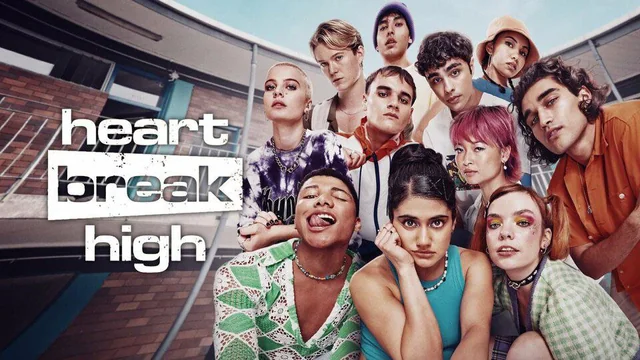
Public Acts, Private Desires: Reading the Sex Map in Heartbreak High

In the first episode of Heartbreak High, the discovery of a “sex map” drawn by Amerie and Harper sets the stage for the show’s exploration of identity, desire, and social dynamics. The scene is charged with tension as the map is unearthed, revealing the intimate, personal territory Amerie and Harper have charted, earning Amerie the now-infamous nickname “map bitch.” The map, a symbol of sexual knowledge and exploration, is more than just a collection of experiences—it’s a radical act of mapping desire, one that invites us to question the boundaries of public and private, and the way that intimacy and sexuality are performed in public spaces.

Amerie’s “sex map” becomes a flashpoint in this scene, drawing attention to the intersection of sexuality and identity, both of which are deeply political. Drawing on José Esteban Muñoz’s Feeling Utopia, we can see how the map reflects a utopian vision of a world where desire and identity are fluid, unconstrained by traditional norms. Muñoz’s idea of a queer utopia suggests that such spaces of alternative sexualities and identities are sites of resistance, where desires are allowed to flourish in defiance of heteronormative expectations. In the context of this scene, the map becomes a symbol of what could be—a space where sexual exploration and queerness are not hidden but embraced.

On the other hand, Lauren Berlant and Michael Warner’s essay Sex in Public emphasizes the ways in which public displays of sexuality often disrupt the boundaries between the private and the public, creating a tension that is felt both personally and collectively. Amerie’s map, as a public artifact of private desire, exposes this tension. It is a public declaration of her sexual agency, one that transcends the boundaries of what is typically deemed acceptable in public discourse. In the show’s high school setting, the map is both a form of personal expression and a spectacle for others to consume, forcing the characters and viewers to confront the politics of privacy, shame, and sexual freedom.

The nickname “map bitch” is a direct result of this public exposure, highlighting how public spaces often impose restrictive labels on those who refuse to conform to normative sexual expectations. Through this lens, the scene critiques the ways in which sexuality is often controlled and policed, but it also points to the possibility of queer resistance, where even the most intimate aspects of life can become acts of subversion. Amerie’s “sex map” is not just a map of her sexual experiences, but a map of possibility, where boundaries can be drawn, redrawn, and ultimately transcended.

Categories
Uncategorized

Framing Elle: How Media Turns Identity into Spectacle in “Heartstopper”

In Heartstopper Season 3, Episode 6 (“Body”), a key scene places Elle Argent, a Black trans sixth-form student and emerging artist, in the spotlight of a radio interview. What begins as a celebration of her rising popularity quickly becomes invasive. The interviewer introduces Elle by noting her 50,000+ followers, then pivots to asking if her art is informed by her trans identity. Elle answers proudly, but when the interviewer adds, “And that’s so important right now, isn’t it?” Elle’s expression falters—captured in a close-up as her confidence turns to discomfort. The conversation spirals as the interviewer references a “culture war” between feminists and trans activists, then brings up a past guest who warned that allowing trans women into women’s bathrooms would increase sexual assault cases. Elle remains composed, asserting, “Trans people aren’t up for debate. We’re human beings.” But she pushes further, ultimately naming the previous guest’s views as transphobic. Her parents, watching from another room, confront the event organizer: “I thought she was here to discuss her art.”

This scene powerfully illustrates how marginalized identities—especially trans identities—are often objectified under the guise of inclusion. By asking Elle to respond to the harmful stereotype that trans women pose a threat in public bathrooms, the interviewer perpetuates a longstanding trans misogynistic narrative. Framed as a “neutral” question, it forces Elle to justify her existence instead of celebrating her work. The interviewer also attempts to pit trans rights against feminism—framing them as incompatible. This tactic is both dishonest and dangerous. It ignores that many trans people are feminists, and that trans-inclusive feminism is essential to the broader fight for gender justice. This false dichotomy distracts from shared goals, reinforcing binaries that uphold exclusion rather than solidarity.

The scene’s direction—lingering close-ups, awkward pauses, tightening camera angles—emphasizes Elle’s emotional labor. Her identity as a young, Black, trans woman and artist is reduced to a political flashpoint, and her art is sidelined. Even her well-meaning allies, like Tao and her parents, hesitate—highlighting how institutional norms can paralyze even supportive voices. Personally, this scene was both moving and frustrating. Elle’s poise is admirable, but her forced vulnerability reflects a painful reality: that visibility doesn’t guarantee safety or respect. Representation matters—but how that representation happens matters more. Elle should have been allowed to speak freely about her art and bring up her own identity if she felt the need to. It shouldn’t have been a topic of conversation forced upon her with no preparation. She and other trans people deserve to be recognized for more than just their trans identities, seen as real people not symbols.