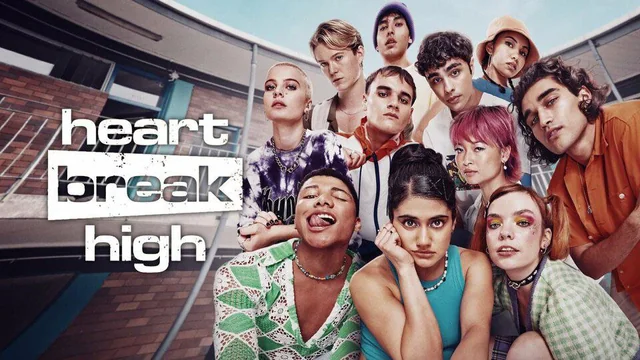
In the first episode of Heartbreak High, the discovery of a “sex map” drawn by Amerie and Harper sets the stage for the show’s exploration of identity, desire, and social dynamics. The scene is charged with tension as the map is unearthed, revealing the intimate, personal territory Amerie and Harper have charted, earning Amerie the now-infamous nickname “map bitch.” The map, a symbol of sexual knowledge and exploration, is more than just a collection of experiences—it’s a radical act of mapping desire, one that invites us to question the boundaries of public and private, and the way that intimacy and sexuality are performed in public spaces.

Amerie’s “sex map” becomes a flashpoint in this scene, drawing attention to the intersection of sexuality and identity, both of which are deeply political. Drawing on José Esteban Muñoz’s Feeling Utopia, we can see how the map reflects a utopian vision of a world where desire and identity are fluid, unconstrained by traditional norms. Muñoz’s idea of a queer utopia suggests that such spaces of alternative sexualities and identities are sites of resistance, where desires are allowed to flourish in defiance of heteronormative expectations. In the context of this scene, the map becomes a symbol of what could be—a space where sexual exploration and queerness are not hidden but embraced.

On the other hand, Lauren Berlant and Michael Warner’s essay Sex in Public emphasizes the ways in which public displays of sexuality often disrupt the boundaries between the private and the public, creating a tension that is felt both personally and collectively. Amerie’s map, as a public artifact of private desire, exposes this tension. It is a public declaration of her sexual agency, one that transcends the boundaries of what is typically deemed acceptable in public discourse. In the show’s high school setting, the map is both a form of personal expression and a spectacle for others to consume, forcing the characters and viewers to confront the politics of privacy, shame, and sexual freedom.

The nickname “map bitch” is a direct result of this public exposure, highlighting how public spaces often impose restrictive labels on those who refuse to conform to normative sexual expectations. Through this lens, the scene critiques the ways in which sexuality is often controlled and policed, but it also points to the possibility of queer resistance, where even the most intimate aspects of life can become acts of subversion. Amerie’s “sex map” is not just a map of her sexual experiences, but a map of possibility, where boundaries can be drawn, redrawn, and ultimately transcended.
3 replies on “Public Acts, Private Desires: Reading the Sex Map in Heartbreak High”
I think the sex map in Heartbreak High is a really interesting example of what happens when the private is unearthed and made public. I think these character’s unabashed documentation of sexual acts and identities has a lot of potential to open up discourse about sex and disrupt normative ideas of sexuality when made public. When sexual acts are private, it is much easier to uphold normative ideas of sex and sexuality because there is nothing to suggest the opposite. In the act of making sex public, privacy can no longer act as a buffer that protects the potential of normativity. I’m curious, though, whether there are contexts in which making sex public actually reinforces normative sexual ideals, specifically in situations where people experience shame in response to people learning about their sexual practices. In these instances, their identity may be policed (either internally or externally) and they could then work harder to stay in the lanes of normative sexuality. I guess my question is, when is making sex public productive in disrupting normative ideals and when can it reinforce them?
I agree with Laura’s comment on the transgressive nature of a map like this, and the ways in which it could perpetuate normative ideals of sex and sexuality. However, I’m also struck by this map’s resemblance to the assemblage visuals we drew in class (of atoms, arrows, spheres, etc…) and the way it literally (what it signifies) represents the way that “the body does not end at the skin…we leave traces of our DNA everywhere we go” (Puar 57). For Amerie, perhaps all of the different symbols, kinds of lines, and circled names are a means of noting how “we are enmeshed in forces, affects, energies, we are composites of information,” thus, not making an Other out of publicizing sex but in fact, creating more of a union between individuals and opening up the possibility of a more queer and borderless world (as you earlier theorized!) (Puar 57).
I really appreciate this analysis and your application of “Sex in Public.” I wrote about Sex Education for my post, and I think that both shows do a nice job of bringing a variety of sexual desires and practices out in the open for characters to discuss and viewers to contemplate. One thing that came to mind when reading this post that nobody has mentioned on this thread is that while the sex map opened up opportunities for important conversations about sex, it also made public certain private acts that could have made people vulnerable to harm. I’m thinking specifically about characters that were outed by the map. I like this show’s attempt to make sex more open and free, but a lot of the character’s consistently treat other really poorly and I don’t think its addressed as well as it could be.