Within the film trilogy The Lord of the Rings, we are introduced to Éowyn in The Two Towers as a noble woman from the house of Rohan, and a damsel in distress. Gríma, the advisor to the king of Rohan, has been manipulating King Théoden while he is under the spell of Saruman in exchange for Éowyn, whom he cares for only for her beauty. Once the spell was broken, and Gríma was chased off the land, Éowyn talks with the protagonists during their preparations for an upcoming battle, she speaks of how she has experience with a sword and calls herself a shield maiden.
In The Return of the King, she mentions fearing “A cage. To stay behind bars until use and old age accept them and all chance of valor has gone beyond recall or desire.” While her brother is the Chief Marshal, actively fighting to defend the people, Éowyn is left with the women and children away from the conflicts and prevented from having her chance of valor. This fear was also compounded by the treatment she would receive from Gríma as an unwilling recipient of his gaze, yet powerless to stop him due to his position and control over the king.
Even with Gríma gone, she was still subjected to being caged by the gendered norms of her society. Because she is a woman, she is looked down upon as a fighter, but as a noble, she has the added pressure of upholding her image and taking on a more reactionary position than one that takes any initiative. This fear can also be reflected in how she was treated when Gríma was influencing the king, and how she was treated as a reward to be earned through his loyalty to Saruman, an object much akin to a bargaining chip. Following this, she was then sent into the caves along with all of the women, children, and elderly, while all the men and boys capable of wielding a sword took up arms to defend the keep from the incoming siege.
Éowyn mentioned how the women of Rohan had learned how to wield a sword to better protect themselves, but for her, it was also a point of confidence as it represented her chance at valor and independence. Then, when she saw the same treatment that she was facing being done to him, she stood up for him by stating how it was the size of the heart that makes for a good soldier, something she saw within herself and in Merry.
When the knights of Rohan marched to defend Minas Tirith, the capital city of the kingdom of Gondor, Éowyn decides to join the army under disguise, along with the hobbit Merry, who was also meant to be left behind. Together they charged against the enemy while riding on horseback, and when they separated Éowyn fought against the witch-king of Angmar and kills his mount, she faced him off in a duel while defending the Théoden, but when she got knocked back Merry came in and provided an opening for Éowyn to deliver the killing blow. The witch-king can then be viewed as a representation of the gendered norms that have been holding Éowyn back, and through his defeat, she has broken free from the norms and can now move forward toward a more progressive future.
While I’m a bit late to the Yellowjackets train, I’ve picked up the show last week and have been slowly working my way through. My interests, besides the supernatural and cannibal aspects, lie within the relationships between the girls in theYellowjackets soccer team. Each girl seems to have differing levels of friendship with each other on land, and that seems to be changing tenfold once they become deserted on the island. The best friend duo Shauna and Jackie seem to be so close… yet, Shauna has been having sexual relations with Jackie’s boyfriend, Jeff.
This story/friendship in the show is interesting to examine for many reasons. Both Shauna and Jackie approach their relationships with Jeff differently. Shauna uses her body as a vehicle to get closer to him, while Jackie seems to provide the emotional/status connection for Jeff. Jackie is the more confident and outspoken of the two, constantly seen giving advice and encouragement (and sometimes discouragement) to Shauna. Shauna is more reserved and lets Jackie assume the dominant role in their relationship, even if she doesn’t like this. Of course, I think this provides enough reason for Shauna feeling inferior to Jackie and then seeking out her boyfriend. By offering Jackie’s boyfriend sex, the one thing Jackie herself will not offer him, Shauna feels as if the power dynamics in their relationship are equal.
Again, this is all just my take. It serves to contextualize the near-abortion scene between Shauna and Taissa on the island. Shauna finding out she is pregnant on the island seems to be either payback for going after something of Jackie’s without her knowledge, or, a possible unity for everyone in the show. Prior to the scene I am interested in, Taissa has already seemed to be catching onto the fact that Shauna is hiding something that she especially does not want Jackie to know about. This is implied through her glances at Shauna and Jackie’s interactions and the poignant scene where Shauna fakes her period with deer’s blood to prove to Jackie that she is still a virgin. Her suspicions are finally confirmed when Shauna reveals to her that she is pregnant with Jackie’s boyfriend’s child in the attic. This becomes a strong bonding point for the two, and Taissa expresses her support for Shauna despite the moral ambiguity of the decisions that got her here.
Following this, Shauna has been mulling over her pregnancy for days, or weeks (?), at this point. She seems to see no other option for peace with Jackie besides aborting the child she conceived with Jeff. And Taissa is following.
Taissa is following, so much so that she notices Shauna’s disappearance from the group at a time when no one else does. She runs after Shauna, screaming her name in hopes that she has not gone through with what Taissa knows she wants to. Taissa knows Shauna wants an abortion, and while maybe in another context that decision would be supported, there are no safe abortions on this island. Taissa’s affinity to Shauna as a woman, and as a survivor of the circumstances they are in, leads her to rush to help.
Taissa sees Shauna almost insert the hot, straight-wired hanger into her and tells her to stop. She gets there and offers her help, regardless of how wrong Shauna may have been for doing what she did.
This scene really reminded me of Ahmed’s “Affinity of Hammers” piece. While Ahmed was directly addressing TERFs and the lack of affinity with trans women, I feel as though some of her ideas may be applicable to this situation.
It’s hard to imagine what one would do in the world of Yellowjackets. Stranded on an island with people you know as teammates, some of whom you love and some who you don’t. It’s a tough situation. It’s even harder for one to imagine having sympathy for Shauna, who has put herself in a situation that is definitely not ideal for their circumstances. Her being pregnant and the eventual birth of her child will change their way of surviving– likely for the worse. And it’s all because she got with Jackie’s boyfriend. But Taissa accepts this, and understands that in order for them to all prosper, Shauna must be supported. Ahmed conceptualizes privilege as an illness, one that is individual in experience as, “we are inflamed by something when or because we come into contact with it”(226). Therefore, it can also be understood as something that afford someone the ability to avoid said illness, if the privilege is enough.
On land, Shauna may have had the privilege to be able to get an abortion and continue to be friends with the unknowing Jackie. But on this island? She cannot afford to do so. Her decision will haunt her until she confronts it. Taissa’s affinity to Shauna can be seen as stemming from her lack of privilege as a black lesbian, who understands the assumptions and misunderstandings that may come with the group knowing Shauna is pregnant. But she also understands that it’s irreversible, and there must be support and work done to keep the group afloat.
Adolescence is a British mini-series that follows the aftermath of a horrifying event: a 13-year-old boy named Jamie stabs a 13-year-old girl at a parking lot. Through interviews, flashbacks, and confessional monologues, the series slowly peels back the layers of Jamie’s life, exposing the toxic online influences, misogynistic peer culture, and deeply flawed adult systems that failed both him and the girl he attacked.
Depiction of the Victim
The portrayal of the victim in Adolescence is particularly striking. She is not flawless—and that’s what makes her so compelling. Unlike many mainstream TV shows or films, which tend to present female victims as pure, innocent, and morally perfect, this series resists that trope. In popular culture, there’s a persistent tendency to portray girl victims in a way that makes it easy for the audience to feel sympathy: they are often quiet, kind, and never make mistakes. But in Adolescence, the victim is more complex. She sends nudes to boys, she mocks Jamie, and she rejects him shortly before he attacks her. These actions don’t make her less of a victim—they make her more human.
Too often, media narratives default to depicting women either as goddesses or virgins—symbols of unattainable purity who exist to win the audience’s tears. For me, this trope is not only cheesy but also lazy. It limits women’s complexity, turning them into symbols rather than people. Adolescence challenges this pattern by allowing the victim to be flawed, messy, and real. In doing so, it forces the viewer to confront a much harder truth: women don’t have to be perfect to deserve protection, justice, and empathy.
Despite not fitting the mold of the “ideal victim,” she remains a clear target of the toxic masculinity and incel ideologies that shape the world around her. She internalized the ideals that incel masculinity expects from women—seeking male attention and even sending nudes in an attempt to gain validation. Her behavior reflects complicated realities of adolescence in a digital age—where girls are simultaneously objectified, shamed, and expected to perform maturity and desirability before they’re even ready.
Reflection
The show paints a disturbing picture of how today’s digital environment—especially platforms like TikTok, YouTube, and Instagram—shapes adolescent behavior. Boys, in particular, are shown growing up within incel communities and Red Pill ideology, absorbing messages that equate dominance with value and women with prizes to be won or conquered. Girls, meanwhile, are forced to navigate a world where their worth is constantly evaluated by their appearance and perceived “rizz”, even in middle school.
Instead of forming healthy relationships, these teens compare each other based on warped ideas of masculinity and desirability. The belief that “80% of women are only attracted to 20% of men”—a common trope in incel circles—is repeated in the show, revealing how boys internalize rejection as personal failure and categorize themselves as “losers” if they don’t receive validation from girls.
One particularly powerful moment comes in Episode 3, where Jamie is sent to see a therapist. Rather than being able to maintain professional detachment, the therapist—an adult woman with years of experience—is visibly rattled by Jamie’s presence.
What’s so striking about this scene is how it flips the usual dynamic: a grown professional is afraid of a child. It’s a jarring reminder that the ideologies kids absorb online are not just edgy jokes or teenage angst—they can manifest as real violence and emotional detachment. Jamie doesn’t seem like a monster, which makes him even scarier. He’s a product of a society that normalizes emotional suppression in boys and romanticizes male dominance.
Another subtle but telling moment is when a girl punches a boy who was involved in covering up Jamie’s actions. Another male student teases him, saying, “You got beaten by a girl? What a sausage.” That casual comment reveals how toxic masculinity is deeply embedded in youth culture: being beaten by a girl is seen not just as a loss, but as emasculation. This line encapsulates how shame and gender roles are enforced even through jokes, and how boys are taught to fear vulnerability or defeat—especially at the hands of girls.
Even if we don’t believe in or support the Met Gala, we cannot deny…it’s incredibly fun to look at (and in some cases, critique) all of the outfits on display each year. The Met Gala has always garnered a range of reactions: some praise it as a celebration of fashion’s growth and reach, while others consider it a massive event of elitism, a consumerist distraction, and heavily removed from social realities.
For most viewers of the Met Gala, the rolled out carpet, flashing cameras, and luxurious bathroom selfies exist outside of their frame of reality. It is an event of exclusivity, a public space and encounter that only few will ever be able to access/be invited to, i.e. not us. That is indeed part of its appeal, but also what makes it so polarizing. And yet, in the month of May, it is the thing on everyone’s lips.
This year, however, things were a little different. This year, the Met Gala’s theme was “Superfine: Tailoring Black Style” with a dress code of “Tailored for You.” Unlike previous themes predicated on White/European fashion and history (or ones where no one understood the assignment cough cough Camp: Notes on Fashion), this year the focus was on Blackness and Black culture, and people everywhere were ecstatic to say the least. Not only were the Met Gala 2025 chairs prominent Black figures in media and fashion —Colman Domingo, A$AP Rocky, Pharrell Williams, and Lewis Hamilton— but all eyes and cameras were on Black attendees, another notable shift from previous years. Such a focused theme and celebration of Blackness in the limelight reminds me of bell hooks’ experience at the cinema, or rather, what she wished it could have been. For the first time, Black audiences may not have needed to develop an “oppositional gaze” in order to experience the Met, not needing to “consciously resist…identification” so as to “not look too deep” (hooks 212).
This time, it was their lives that were centered, their history, their fashion. They did not need to find a way to make themselves present in an absence of their selfhood, but could see themselves represented in these figures— adorned in gorgeous attire—who looked like them. And truly…the looks this year were STUNNING and it was so refreshing to see such a commitment to theme, especially by Black attendees (my favorites include Janelle Monae, Teyana Taylor, and Lauryn Hill!)
Indeed, as Law Roach so appropriately said, “They done fucked up and made the Met Gala Black!”
And yet…something about this feels not quite right. Why did Anna Wintour choose this theme? Noticing the backlash, was this all just a play to appease spectators of color to raise more awareness and by extension, raise more money? To what extent is the Met a site of tokenism in this one-off occasion where finally there is a recognition of Black livelihood? I am hesitant to say that there was no consideration of Black spectatorship, for making a spectacle of Blackness for one night and one night only sends a message: our recognition of your culture is temporary, and yet, by centering it this once, we can control the way you interrogate us. We are giving you a platform, we are putting you on display, be grateful and give us your attention. Even the New York Times, in an article titled The Tricky Politics of This Year’s Met Gala, wrote that “suddenly the Met…has begun to look like the resistance. And the gala, which in recent years has been criticized as a tone-deaf display of privilege and fashion absurdity, is being seen as…a display of ‘allyship’” (Friedman 2025). But…is it? Is this truly the most radical act of solidarity and collectivity in our current climate? Or is it a simple motion of performative inclusivity? If Blackness was truly important to the Met, it would be present in every single Met Gala. There would be genuine, active, mutual-aid efforts on the part of the Met to support Black communities. So again… I ask… to what extent might we imagine this event as sincere appreciation or commodification of Black culture—an event where capturing and manipulating the gaze of the “Other” (the non-elite, the normal, the common) is an essential act for its survival and continuation?
Nostalgia is a powerful force when it comes to how we recount our past, constructing beautiful non realities as we yearn for times not like our current. This force is amplified even further when it comes to how we view our childhoods, a simpler time when the world didn’t seem as scary and the systems the world relied upon seemed to work. While some of these assertions may contain a bit of truth, it often covers up the unwieldy fact that such a time period never existed in the first place. Hayden Anhedonia, known by her stage name Ethel Cain, plays with this nostalgia through her work and music videos that contest nostalgic senses of national pride found within America during the early 2000’s and questions what really made rural America special.Unlike many more left leaning depictions of rural America which often take the route of lampooning such communities as uninformed country bumpkins, Anhedonia offers a more sympathetic view, showing both the beauty and shortcomings of rural conservative America.
Ethel Cain’s music video for the aptly titled song American Teenager was the third single teased off of her album Preachers Daughter, and reflects on growing up in Bush’s rural america. The entire video is shot on an old camcorder without much thought given to professionalism, giving the entire video a grainy, spontaneous quality reminiscent of a home video. The homevideo feeling is amplified by the fact the video is shot entirely in Anhedonia’s small hometown of 7,000. This youthful atmosphere is captured in the various other nothings of youth, lazily riding a bike down a deserted street, hunching over the display of a convenience store, and hopping over fences circling the highschool football stadium. Yet, there is no sense of homecoming within any of these scenes. The novice recording, rather than evoking a sense of peaceful simplicity instead reinforces a sense of deterioration and passage of time as Ethel is only ever shown alone, making the stadium and streets look bare and forgotten. These various scenes create the idea that she can no longer return to these scenes of her childhood as a child. The cheerleader outfit she has on for much of it looks small and juvenile on her body, also heightened by the manifestation of her trans identity. The ideal image of a young, happy, popular, cisgender cheerleader is broken down in this way. The childhood we once yearned for can never come back, but Ethel also insinuates that it never existed in the way we might like to remember it either.
While not an explicit example of homonationalism, I think that the concept was certainly considered when the video and song were being produced. Homonationalism generates a shared culture in which one’s national identity, in this case that of the American, is made appealing through its comparison to other countries, many examples of which occurred during the myriad of justifications for the Iraq war between 2003-2011. This nationalism as the center of identity is harmful for many reasons, but Anhedonia through her artistic work and statements argues that it has resulted in a destruction of a small interpersonal community. The figure of the neighbor’s brother who died in overseas war is not scorned, but rather empathized with through the universality of the American dream we all hope for.
In this “thought piece,” I use queerness as a framework, an analytical lens. To me, queerness means to decenter the normative, to destabilize the hegemonic, the “natural.” A queer analytic, a ‘queering’ it means to question, deliberately, intersectionally, and intentionally. It means to ask the why, the what, the how, and the what now? Queer(ing) is both a noun and a verb, and a framework I use to analyze a beautiful scene. Queerness is a possibility. As elusive as it is, I seek to define it in ways that my reader may be able to use and contextualize to this particular example.
Although, the film scene I analyze is not explicitly queer – it has little to do with sexuality (althought, this may say more about my understanding of queerness as a sexuality based theory/existence). Still, it has a lot to say about relationships with people, characterized by race, wealth, and being an “insider.” I analyze a scene from the movie called “A Great Divide,” directed and written by Jean Shim. Informed by her experience living in Jackson, Wyoming, at the start of the 2020 pandemic, and inspired to add to the discourse on Asian-American hate that spread, as deadly as the COVID-19 virus, during the pandemic. It was a way for her to reflect on and process the reports of discrimination and violence against Asian-Americans that had begun erupting across the country.
In this movie, Ken Jeong stars as Isaac Lee, the family patriarch. He is why his family moved from their California community to Wyoming. Co-starring is Jae Suh Park, the uptight, yet full-of-depth, mother, called Jenna or Mrs Lee. She is driving their big black Escalade car across gorgeous Wyoming plains, going to a restaurant to celebrate Ellie’s arrival. Ellie (Miya Cech, who plays a Chinese character) visits Benjamin, played by Emerson Min, the son. The main cast is all ethnically Asia (Korean and Chinese), and the rest of the characters are all white Americans. I love Americans, but watching this scene reminded me why I am terrified of a very particular branch of American racism (patriotism). It is not overt and is dilated to ‘protecting’ their land and culture from outsiders. And the outsiders are, of course, not white.
Scene:
The family is in a large, comfortabel car, driving across rural expanses of Wyoming. Issac is chuckling with Ellie and his son about K-pop Drama. He’s trying to be cool, and Jenna is affirming and smiling along. Then he starts talking about a book about the immigrant experience in the United States of America, and his wife, Jenna, asks him where the immigrant is from. Issac, the dad, chuckles and dismisses her quip and says, “It doesn’t matter,” and instead says to just listen to him read the book.
His wife protests, “Of course, it matters” (0:36:36). The kids sing along to the song, and drown out the mother’s further comments and questions (unintentionally). They reach their intended destination: a cafe called “Yankee Doodles.” The scene in the cafe is, quite frankly, painful to watch. It screams a particular type of loud patriotic American: guns, bullets, American flags, “freedom fries” (bullets in a fry bag), gun memerbolia, (all white) customers staring at the out-of-place Asian Americans trying to order food, the hostess rudely denying options to assist and engage with the family. It was made more awkward by the dad, trying to commit to playfully using a “cowboy” southern accent while trying to order.
I think this scene’s foreshadowing of “patriotic iconography, flags and people” made racism seem made all the more real. One can see it on the screen and except that this particular kind of American pride, aloofness from the government, may be intertwined together with bigotry, or distaste and distate for ‘outsiders’ in rural America. I admit, it is prejudice, on my part, to assume that certain people in certain parts of rurual(ish) America is a stereotype. But, I think it is also the film’s intention to make it more than obvious. I, along with Asian Americans may have to deal with ‘microaggressions’ and subtle racism (and the less obvious and less visible systemtic and systematic discriminatory practices) every day, but here, it feels more overt, dramatized, real. Yet, how the couple interacts with and deals with racism is different. I think they gloss over it. But the kids are confused by it. Ellie jumps back into the car with Benjamin and finds Mrs Lee sitting at the wheel, without her husband. She asks Mrs Lee if the people in the cafe were being, “you know, racist in there?” (0:41:23). Benjamin tries to push the conversation aside, but Ellie persists and asks Mrs Lee again. The absence of a clear answer is itself a gesture.
But what follows next is the scene that broke me. The powerful tour-de-force monologue of Jenna/Mrs Lee that I related to. This scene is right at the turning point of the film, where the family has already delath withe veral instances of weird, kind of racist and just not-neighborly behaviors from the community they moved into. And Mrs Lee seems to have enough. I think she wants to yell and fight but instead she sits in her car.
And with tears in her eyes, Mrs Lee gently pauses and enquires, “Can I share something with you, Ellie?”
When Mrs Lee, or Jenna, was in the third grade, she started in a new school. She was the only Asian girl in the whole class. There was another girl in class, Leanne, with the most beautiful blonde hair and green eyes.
“And she wore the prettiest dresses, that my parents couldn’t possibly afford.” (00:58:13)
Her favorite princess was Cinderella. If she had the right dress, she too could be a princess. Then, one day, a woman showed up with a beautiful powder blue dress. Little Jenna thought she could “borrow” this dress when her parents, who worked in a laundry and dry cleaning service (day in and day out to pay the bills!) weren’t looking. She hid it in her backpack to wear to school, hoping that everyone would look at her the way people looked at Leanne. (I sense there was in implict understanding of how people percieved and treated Leanne because of her beauty and social standing. For Jenna, the dress symbolized a longing. Something she may never really realize fully, but perhaps for a moment).
She wore the dress to school, which turned out to be Leanne’s dress. Leanne called her a thief and said, “Since an ugly Chinese girl wore it, she couldn’t wear it again,” and the kids at school called her a dirty thief and told her to “go back where she came from.” (00:44:25)
What’s worse is that when the teacher called up Jenna’s mother (Benjamin’s Halmoni or grandmother), she refused to pick her up because even the mother thought she was a thief. Hard. Tough love. Through tears and a choking voice, Jenna says that she curled up into a ball and cried forever. She couldn’t be Cinderella, she couldn’t even be Leanne.
In this scene, I sense the clear intersection of wealth and race, whiteness and wealth, and vice versa. Jenna’s parents were refugees from North Korea who escaped the Communist party and fled to America to pursue a education and better life opportunities. After a point, they couldn’t afford their graduate education, so they had to leave their educational institutions to work, earn money, and support their (unplanned) family. They worked as dry cleaners and dishwashers (this is the classic deptiction of an Asian American version of the immigrant struggles to ‘Make It In America’). However, I read Jenna’s outpour of truth and emotion as a disruption to the immigrant narrative. Unlike Isaac’s experience as a first-generation American and his relatively wealthier experience growing up in America, for Jenna, it matters who the immigrant is. I categorize the dad, Issac Lee’s dismissal of the immigrant’s identity (earlier in 00:36:36), as a wealth indicator. Mr Lee’s parents were diplomats and wealthy and were privileged in a manner that Jenna’s parents were not. Both of them faced forms of racism, being visibly Asian, but they faced different levels of struggles while ‘making it.’ I see it in Jenna’s eyes and her deliberative, tear-filled pauses. Her story is not about childhood cruelty. It is context. A gesture. Her recounting is almost “anticipatory performance,” an embodied act that reveals more than it resolves. Gestures, as Rodriguez writes, are “literal and figurative. When Mrs. Lee shares her formative memory with Ellie, she recounts it in such a powerful manner. The single shot centers her face, her expressions, and her deep, deliberate pauses. And it is enough to visualize the depth of her experience. Her anecdote is a deep, lasting wound of a racist lived experience, hardened by her mother’s tough love actions. But, she shares her story with the two kids, and reopens it not to heal, but to show: as resistance. It also alludes to her repression of emotions. As an Asian woman, she laments how her mother treated her. Her mother (Halmoni) did not treat her with the open love and comfort she would have expected, and through her monologue, he disrupts the silence she held within her. She had never shared this story before. But the cafe scene, along with Ellie’s question and her son’s presence, perhaps, pruned her open for a moment. I interpret her disruption as a way of imagining an alternative reality. Perhaps not for her, but for her children who have not yet endured the open racism that she may have. Queerness, as José Muñoz retells, is a horizon, a way of imagining a world that does not yet exist. “A not yet.” When Mrs. Lee shares her story, she does not seek sympathy or catharsis. In my purview, Jenna’s openness, as opposed to her typical stern behavior in the rest of the film, I view through the praxis of queering: a refusal to accept the normative logic of assimilation, of silence, of shame.
In her final sentence, she alludes that Jenna wasn’t just excluded for being Asian; she was excluded for not being able to afford the fantasy as a “Poor Chinese Girl” (Mind you, she’s Korean).
Asking the other question, looking at Jenna’s experience not just through race, but also class, gives the audience context for why her trauma was so repressed. Jenna’s story, her immigrant experience, her first-generation American experience is shaped by her refugee Korean mother’s resounding silence to “suck it up” and be quiet. She developed in opposition. I see it in Jenna, her desire to fight inequality and daily racism in Wyoming, but also her position as a woman, being her husband’s plus one, a complementary companion.
In the cafe and heartwrenching car scene, she takes back her agency. She cannot heal or fix or shield the children from the racism, but she can try and explain, and no longer repress it. She bears witness to her story, and the audience is able to carry her story too (in a very meta sense). Her emotions, her face, her pauses, and her struggle to be honest until the moment at the cafe seemed a queering act. In telling the story, Jenna does not erase the trauma. She rehearses it, perhaps. She gestures to it in a manner Ellie may seek to understand. I believe this is inherently political and vulnerable. Racism and white supremacy do not disappear at the crux of this speech. Her story gives it weight, and this weight is now shared among the children, who sought clarity. This is her love. And, I, too, bear witness to her her truth. Her love.
The scene opens with Nick and Tom on a train ride to the Yale Club. The train suddenly comes to a halt, and Tom calls out “Come on”. Nick questions Tom, and Tom reassures, “Just trust me”. They make their way off the train and through the Valley of Ashes, which is the part of town where the working class live. The air is hazy, the sky is a mundane gray, and everything is covered in a thick layer of dust. Nick and Tom enter a car repair shop, and Tom says “hello” to a man named Wilson. Their relationship is clearly transactional, and a power differential becomes apparent early on in their interaction. Tom, dressed head to foot in a tailored pinstripe navy blue suit, asks Wilson how his business is going. Wilson, draped in a tank top that was once white but is now the color of the gray sky, responds, “I can’t complain. So when are you gonna sell me that car?”. Tom explains that he still has a man working on it, and Wilson retorts that the guy works slowly. Tom then threatens to sell it elsewhere. Tom is aware of the power that he holds as an elite, upper class man in comparison to Wilson who is a part of the working class. Tom helps Wilson out on occasion by supporting his business. It is possible that he does this out of generosity, but more probable that Tom helps him out to support Tom’s mistress and Wilson’s wife, Myrtle.
We meet Myrtle in the next moment. While the men are arguing, she walks down the stairs, adorned in a cherry red dress with a red lip and jewelry to match. Her outfit is striking and gaudy. She quips back at the men who have been arguing, cleverly redirecting the conversation. She lovingly looks into Tom’s eyes and gives him a shy smile. He nods at her, and fixes his suit in response. Wilson exits the scene in search of some chairs for his guests, and Myrtle playfully touches Tom’s chest. It is clear that Myrtle and Tom are having an affair; however, it is unclear if Wilson is aware of it. Even if he was, there is little he could do about it given his lack of wealth and social status in comparison to Tom’s.
Tom treats Myrtle similarly to the way he does Wilson, using his power to control both of them. Myrtle asks Tom if they can get the dog for the apartment, and Tom responds, “Whatever you want”. It becomes evident that Myrtle financially depends on Tom, using him as a way to escape poverty, and in return she gives him sexual favors and love. It is obvious that Tom does not take Myrtle seriously, and rather sees her as “a good time”. He may love her as she does him; however, he would never divorce his wife Daisy to marry her. Daisy represents the “golden girl” of the era. She is young, beautiful, and comes from money. She is what we would now refer to as a “trophy wife”. Myrtle, represented as working class, gaudy, and loud, will never be that “golden girl” or “trophy wife”. Instead, she is a toy for Tom to mess around with and dispose of when she no longer serves his interests. In this way, it becomes apparent that working class individuals are seen as less than human by the elite who believe they can be used and disposed of when no longer beneficial.
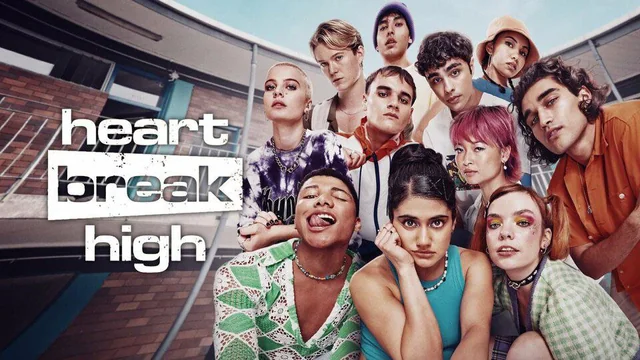
In the first episode of Heartbreak High, the discovery of a “sex map” drawn by Amerie and Harper sets the stage for the show’s exploration of identity, desire, and social dynamics. The scene is charged with tension as the map is unearthed, revealing the intimate, personal territory Amerie and Harper have charted, earning Amerie the now-infamous nickname “map bitch.” The map, a symbol of sexual knowledge and exploration, is more than just a collection of experiences—it’s a radical act of mapping desire, one that invites us to question the boundaries of public and private, and the way that intimacy and sexuality are performed in public spaces.
Amerie’s “sex map” becomes a flashpoint in this scene, drawing attention to the intersection of sexuality and identity, both of which are deeply political. Drawing on José Esteban Muñoz’s Feeling Utopia, we can see how the map reflects a utopian vision of a world where desire and identity are fluid, unconstrained by traditional norms. Muñoz’s idea of a queer utopia suggests that such spaces of alternative sexualities and identities are sites of resistance, where desires are allowed to flourish in defiance of heteronormative expectations. In the context of this scene, the map becomes a symbol of what could be—a space where sexual exploration and queerness are not hidden but embraced.
On the other hand, Lauren Berlant and Michael Warner’s essay Sex in Public emphasizes the ways in which public displays of sexuality often disrupt the boundaries between the private and the public, creating a tension that is felt both personally and collectively. Amerie’s map, as a public artifact of private desire, exposes this tension. It is a public declaration of her sexual agency, one that transcends the boundaries of what is typically deemed acceptable in public discourse. In the show’s high school setting, the map is both a form of personal expression and a spectacle for others to consume, forcing the characters and viewers to confront the politics of privacy, shame, and sexual freedom.
The nickname “map bitch” is a direct result of this public exposure, highlighting how public spaces often impose restrictive labels on those who refuse to conform to normative sexual expectations. Through this lens, the scene critiques the ways in which sexuality is often controlled and policed, but it also points to the possibility of queer resistance, where even the most intimate aspects of life can become acts of subversion. Amerie’s “sex map” is not just a map of her sexual experiences, but a map of possibility, where boundaries can be drawn, redrawn, and ultimately transcended.
In Janelle Monáe’s film Dirty Computer, the music video “PYNK” begins with Jane (Monáe’s character) driving a (hovering) pink convertible with other women of color through a pink desert, arriving at the Pynk Rest Stop and Inn, denoted with an old-fashioned drive-in sign and another sign advertising that “girls eat free and never leave.” The song then starts with close up shots of fingers snapping and high-heeled feet tapping to the beat, images of women of color dressed extravagantly at an empty pool and Janelle Monáe in the pink desert, often gazing directly into the camera. As her voice comes in with the lyric “pink like the inside of your…” the scene shifts to Jane and four other women of color wearing frilly pink, yonic pants, as well as two other women sans pants, dancing with the pink desert as their backdrop. Their dancing is interspersed with shots of Jane on her own and an oyster covered in pink glitter, then a close up of Jane with Zen’s (Tessa Thompson’s character) head between her legs, seeming to be the clitoris of the vulva image evoked by the pants. More dancing scenes follow, in the convertible, the empty pool, and the desert, before a short instrumental—during which Zen and Jane are on opposite ends of a row of women of color in white underwear, with the camera zoomed in to their butts, thrust into the air. When the soft chorus starts again, Jane is dancing on a fluffy pink bed with more women, with close up images of their underwear with “sex cells,” “great cosmic mother,” and “I grab back” embroidered on them, as well as images of a fluffy cat, more oysters, hands grasping silky sheets, and feathers and lingerie. The second part of the chorus and the following verse is danced to in a diner and the poolside at night, interspersed with scenes of the women working out. The scene then shifts back to the desert for the chorus, where Jane and Zen are on a mattress, staring into each others’ eyes and dancing sensually, switching to rapid close up, evocative images of women’s bodies—tongues touching, a bikini being untied, spit falling from a mouth, a stomach—and yonic objects before the song ends with the lyric “pink is my favorite part.”
PYNK is a brash celebration of creation, self love, sexuality, and pussy power! PYNK is the color that unites us all, for pink is the color found in the deepest and darkest nooks and crannies of humans everywhere. PYNK is where the future is born.
Janelle Monáe
The song and music video seems to be a celebration of feminine sexuality, featuring only women of color. “PYNK” seems to offer a utopian alternative to the pop and hip hop music videos of the 90s and early 2000s, where women’s bodies were objectified, becoming accessories to the (often male) singer, and female viewers had to choose between identifying with the victim or the perpetrator of the phallocentric gaze—where bell hooks would call for an oppositional gaze. Close-up images of black women’s butts and breasts are featured in the “PYNK,” but for a female audience. The women are the holders of a sexualizing gaze, rather than the object of this gaze, with their constant movement and direct eye contact with the camera giving them a sense of agency. This agency is furthered by the scene with Zen’s head between Jane’s legs, where the pseudo clitoral stimulation seems to argue that women can be the receiver of pleasure, provided by themselves or other women. The yonic pants worn in this scene seem to be a performance of objecthood—in this case, the women become a vulva—where the costume/avatar circumvents the prescribed limitations on black women in the public sphere. Janelle Monáe finds power in her femininity, instead of a reduced notion of self.
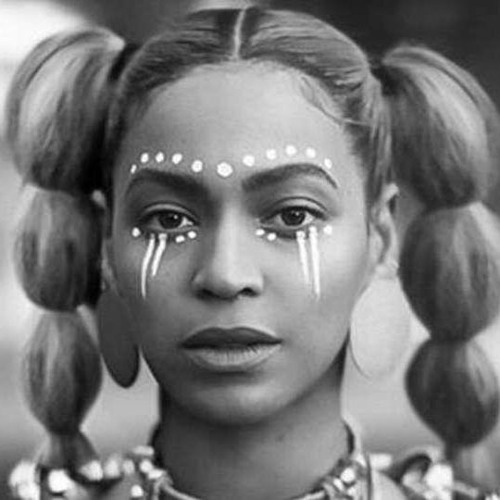
The video starts with empty parking garage, empty football field. A girl with white hair stand facing the empty field. It cuts to Beyonce lying on a football field, white dress, frizzy wild hair with bleached ends, looking down. The dialogue begins and the shot is black and white, she is walking down the parking in what looks like a wedding dress, talking about how “he” bathes her until she forgets “their” names and faces. Jump cuts to her in a gym boxing, and then to a dark scene with a woman walking on a terrace. The word “reformation” comes on the screen, and it looks like an old-timey shot — the long skirt, b&w shot, etc. It cuts back to Beyonce who is lying in bed with a bonnet in her hair. After a few more shots back and forth, the scene becomes coloured again. We look at trees from under, see their flowers dangling. The sea is shown, women walk in a line, the water upto their ankles. They wear sheer garments — white-pink dresses, half soaked, and their legs can be seen through this covering. The water moves as they walk. They are all black women, with Beyonce at the head of the line. They all have braids and some sort of black or associated hairstyle, such as dreadlocks. You can see Beyonce in a shot, her gaze unfocused with the sun shining behind her. The women wear white with black stripes in the middle, and act like a group. They hold hands as they face the sea, all in a line. It soon cuts to Beyonce on a chair that is lying down, on a sort of platform. It looks like she is sitting on the chair, but the chair and her are lying with their backs on the floor. Flowers surround this platform. “You and me could calm a war down” plays at the back.
I write about this scene because before this class, I did not realise how much history was behind it. It was shot in Igbo, where the Igbo Landing of 1803 occurred. This was a scene of mass suicides to resist enslavement. At least 10 Igbo died, which was highlighted int he music video by showing the 10 women walking next to the shoreline. A scene at the end of the video showed Beyonce dressed as an Igbo woman, which was a direct reach into history to bring it to life. Her music video brought this oral history into mainstream attention. The water, specifically the water spirit, plays an important role in Igbo beliefs and cultures, and has been highlighted in the video.
As someone who doesn’t have this knowledge or history, I think it is a really big step to show it on such a big platform. That being said, I wish I had more information about this event, that I don’t think was given through the piece of media. Most news channels interpreted it form a music lens, and it was mostly the comments on the Youtube video that informed people of this history. I can see the message being exponentially more impactful had there been more information given at the end, instead of being left to interpretation. However, it is still a huge step for it to be displayed on such a platform, and I would be curious to learn more about it.
I do want to acknowledge my positionality in this — I am not black nor do I know as much about Black history as I would like to. This interpretation came from some research into the topic, but if anyone has more knowledge, please reach out or comment on this post because I would love to hear from you.