Categories
Uncategorized

Douglas is Cancelled: Victory for Every Women?

Summary

Douglas Bellowes and the young and beautiful Madeline host a popular nighttime current events program Live at Six. They share a collegial, slightly flirtatious, occasionally witty banter that masks deeper tensions beneath the surface.

After Douglas attends his cousin’s wedding with his wife Sheila, someone tweets that Douglas was overheard making a sexist joke. Douglas vehemently denies telling any offensive joke and doubles down, insisting he doesn’t remember saying anything inappropriate. “We can move in the direction of honesty once we’ve decided on the facts,” Toby, the show’s producer, tells him with calculated pragmatism. Douglas isn’t worried, convinced the story will “burn itself out” like so many scandals before it. And it might have if Madeline hadn’t decided to quote the original tweet with the comment “Don’t believe this. Not my co-presenter” to her two million followers. She claims she did this to help and support Douglas, presenting herself as his loyal colleague defending his reputation.

Madeline’s Revenge

In reality, this is all part of Madeline’s calculated revenge scheme. For months, Douglas has been telling a crude joke about how he supposedly witnessed Madeline sleeping with Toby to earn her position on the show. The truth is that none of this ever happened – Douglas simply saw Madeline in Toby’s hotel room to do an interview. He then shared this as a “joke”with colleagues and with people who asked him ‘Why is Madeline so successful?’

The reality was far more sinister. Toby had indeed tried to pressure Madeline into bed, but she had successfully rebuffed his advances. However, when Douglas witnessed what appeared to be Madeline in distress outside Toby’s hotel room – looking, as he later described it, “terrified” – he offered no help or support. Instead, he told Madeline “it’s all worth it” and shut Toby’s door, essentially enabling the harassment to continue.

Because of Madeline’s successful revenge plot, Douglas’s career comes to an abrupt and humiliating end.

Role Reversal

Throughout the episodes, Madeline deliberately adopts traditionally “male” behaviors in the workplace. She becomes aggressive, overly flirtatious, and frequently initiates unwanted physical contact with Douglas – mirroring the behavior of men who use their positions to harass female colleagues. However, her advances are subtle enough that they fall into that gray area where most women cannot formally complain, knowing they’ll be accused of overreacting or being overly sensitive by male colleagues who dismiss such behavior as harmless.

But Madeline is both beautiful and brilliant, and she wields these attributes like weapons to control the circumstance. When Douglas nervously suggests that people might think they’re having an affair, Madeline laughs. “You and me, an affair? You’re actually older than my dad,” she says with cutting precision. Then, delivering the killer blow: “Douglas, one of us is hot, and one of us is clever, and unfortunately for you, both of them are me.”

Double Standards Exposed

Society’s double standards are on full display throughout the series. Douglas insists his joke, which he still swears he doesn’t remember making, was merely sexist, not misogynistic – as if this distinction somehow absolves him. Morgan, another character, believes that using the word “twat” in a joke is perfectly acceptable. “It can mean someone so stupid you’re comparing them to lady parts. How is that demeaning?” he wonders with genuine confusion. Meanwhile, Madeline finds herself asking why a photograph of her in a bikini becomes front-page news. Claudia has to remind her father that “It’s not funny to make women feel sexually menaced.” Far too many characters claim to be feminists while embodying the exact opposite of feminist values.

The “Good Guys” Defense

There are too many men like Douglas who insist they’re fundamentally different from obvious predators like Toby. They position themselves as “nice guys” who would never engage in overt sexual harassment, conveniently ignoring their own complicity in maintaining toxic workplace cultures. Douglas genuinely believes he’s a good person because he’s never directly propositioned a colleague or made explicitly sexual demands.

But Madeline sees through this facade completely. She understands that the Douglases of the world are often more dangerous than the Tobys because they provide cover for the system. They’re the ones who laugh at inappropriate jokes, who spread rumors about female colleagues, who turn away when they witness harassment, and who consistently prioritize their own comfort over others’ safety.

When Douglas is finally exposed and faces the consequences of his actions, his response reveals his true nature. Rather than accepting responsibility or showing remorse, he explodes in pure, entitled rage: “Why me? Why am I the one being punished? He’s the one who did it!” he shouts, pointing accusingly at Toby, as if his own behavior is somehow less culpable because it was indirect.

Madeline’s response cuts to the heart of the entire system: “The world is full of men like Toby, I truly believe that. But there are whole armies out there of men not like Toby. But here’s the thing. Here’s the question. If there are so many of you, where are you? Where the hell are you all the time?”

Her question exposes the fundamental lie that Douglas and men like him tell themselves. They claim to be different, better, more ethical than the obvious predators, but when faced with opportunities to actually intervene, support victims, or challenge harmful behavior, they consistently choose their own comfort and advancement instead.

Episode 3: The Uncomfortable Truth

Episode 3 is particularly uncomfortable because it mirrors real-life situations that many women recognize all too well. Toby appears to be acting with good intentions, but he’s systematically pushing Madeline’s boundaries, testing how much he can get away with through seemingly innocent dirty jokes and inappropriate comments. The moment she objects or pushes back, he immediately deflects: “I didn’t mean it that way at all. Aren’t you overthinking this?” He expertly shifts all the blame onto her, making her question her own perceptions and reactions.

This resonates deeply because it reflects the experiences of women in male-dominated spaces, where they’re often treated as objects for entertainment, where boundaries are constantly tested, and where speaking up results in being labeled as difficult or humorless.

Victory for Everyone?

In the final scenes, Madeline is being interviewed that her partner was cancelled of being sexist, and the interviewer declares, “Your appointment is seen as a victory for women everywhere.” However, Madeline firmly corrects this narrative: “I thought it was a victory for me.”

This distinction is crucial and deeply personal. From beginning to end, Madeline fought this battle alone. She is intelligent and strong, and she used the patriarchal system’s own rules to defeat it. Because patriarchal systems fear weakness, women must become stronger, smarter, and more skilled at navigating these rules than their male counterparts to achieve victory.

Madeline had to become more cunning than the men around her, more strategic, and more ruthless. She couldn’t rely on solidarity or systemic change – she had to outmaneuver them individually. But this victory, while personally satisfying, also highlights a troubling reality: not all women possess Madeline’s intelligence, resources, or strategic capabilities. Her triumph is exceptional precisely because it requires exceptional qualities that most people, regardless of gender, simply don’t possess.

The series ultimately asks whether individual victories like Madeline’s represent real progress, or whether they simply prove how rigged the system remains for everyone else.

Categories
Uncategorized

Visibility Burnout: When Representation Isn’t Power

In the last decade, popular TV has become more diverse than ever. Queer, trans, and racially marginalized characters are no longer just background figures — they’re often central to the story. But even as visibility increases, many of these characters remain stuck in shallow or stereotypical roles. This is what I call visibility burnout: the emotional and representational exhaustion that comes from being constantly visible but rarely supported with real narrative depth or power. It’s the toll of being seen, but not truly cared for.

Visibility is often treated as progress — a sign that society is moving forward. For many marginalized communities, being seen has been a powerful political demand. But as trans activist Miss Major puts it, “They see us, but they still don’t care about us.” Too often, media offers visibility without protection, agency, or care. Characters are placed in the spotlight, only to become symbols or emotional laborers for others. The spotlight can feel more like exposure than empowerment.

A clear example is Eric Effiong from Netflix’s Sex Education (2019–2023). Eric is a vibrant, funny, emotionally intelligent Nigerian-British teen — a rare and refreshing presence. But despite his centrality, Eric spends much of the series supporting the emotional development of others, especially the show’s white, straight protagonist, Otis. His own narrative is repeatedly sidelined. Even when Eric travels to Nigeria and finds moments of queer joy, these scenes are visually striking but narratively isolated — quickly forgotten and disconnected from the show’s main arcs.

Eric’s story isn’t unique. Across contemporary TV, we see marginalized characters who are colorful and meme-worthy, but underdeveloped. Their visibility often masks a lack of real care or investment. As philosopher Byung-Chul Han notes, our culture pressures individuals — especially those on the margins — to perform endlessly. The result is burnout: not just emotional fatigue, but representational depletion and disillusionment.

To move beyond visibility burnout, we need more than diverse casting. We need better stories — ones that give marginalized characters space to grow, rest, and be complex. We also need structural change behind the camera. Real representation means care, not just presence. Because being seen is not the same as being safe.

Categories
Uncategorized

“Governor Hot Wheels”, Ableism, and Anti-DEI

By Karina Morales-Pineda

In this blog post, I am reacting to a viral moment and the reactions following congresswoman Jasmine Crockett, calling Governor Greg Abbott “Governor Hot Wheels,” and the contradictions of Abott holding both anti-DEI and anti-LGBTQ policies. My thoughts are in conversation with the introduction to Crip Theory: Cultural Signs of Queerness and Disability by Robert McRuer. Representative Crockett received much backlash and controversy following her comment.

However, this viral moment highlighted how this comment caused more outrage among some voters than the contradictory policies of Governor Abbott. 

Tweets reacting to Greg Abbott, a disabled governor, dismantling DEI efforts, while accessibility and combating discrimination due to ableism is part of DEI. Governor Abbott is allowing and facilitating discrimination against queer and trans bodies by dictating what is conforming and what is non-conforming. Compulsory able-bodiedness, also allows able-bodiedness to the standard/default/conforming and valued bodies in a capitalist society.

Disabilities and death from COVID, and Greg Abbott’s dismissal of mask and vaccine mandates, is another example of compulsory able-bodiedness. Curfews and adjustments to the pandemic economically impacted Texas, yet there was no hesitation to return to the demands of capitalism at the expense of fatalities and disabled bodies. McRuer connects the demands of capitalism and globalism to how disabled bodies are valued, taken advantage of, and created. 

Categories
Uncategorized

The Bachelor Franchise and Heteronormativity

The Bachelor franchise consists of multiple shows including The Bachelor, The Bachelorette, Bachelor in Paradise, The Golden Bachelor, and The Golden Bachelorette. In these shows, contestants vie for the love of the bachelor/bachelorette/golden bachelor/golden bachelorette. During 2024, Season 28 of The Bachelor debuted on national television. Joey Graziadei was the bachelor of the season. The final two contestants were Kelsey and Daisy. The season ended with a shocking finale in which Daisy realized that Joey had been distant during the final date as a way to let her down gently because he was not going to choose her at the end. This was difficult for Daisy to hear since she had just opened herself up to Joey, and proclaimed her love for him during the finale. Daisy visited Kelsey’s room during the finale, and reassured her that she was the one for Joey. She gave Kelsey the relief of knowing that when she walked down the aisle to see Joey for the last time of the season, he would get down on one knee to propose to her. This snapshot of The Bachelor’s finale gives a taste of the core themes explored in the show: love, heartbreak, and friendship. 

The franchise has become more inclusive over the years by introducing The Bachelorette, The Golden Bachelor, and The Golden Bachelorette to give women and older adults the opportunity to find love. Furthermore, it has tried to increase the racial diversity of contestants. However, it has yet to create a dating show for queer individuals. The Bachelor franchise exemplifies heteronormativity by centering its storylines around the heterosexual couple model. 

Moreover, it reproduces stereotypes about gender by having the women and men contestants participate in gender typed activities. For example, one of the games that the women of The Bachelor participated in was a mock wedding in which they adorned themselves in white dresses, pretended to be Joey’s bride, and vied for his attention. The men of the Season 21 of The Bachelorette did not engage in activities of this sort. Their season was full of helicopter rides, race car driving, and comedy club visits. By having the women and men engage in stereotypical activities associated with their gender, they are reproducing age old discourse that suggests that women engage in feminine activities and men in masculine ones. In addition, The Bachelor franchise is problematic for its lack of body diversity. They are known to cast only slim, conventionally attractive people. Season 21 of The Bachelorette featured one plus size contestant; however, he was eliminated in the first episode. This casting decision of mostly slim, conventionally attractive people, similar to most other Hollywood productions, conveys the message that only slim, conventionally attractive people are deserving of having their love stories broadcast to the world. The Bachelor franchise has grown a lot in its representation of age and racial diversity, but it still has a long way to go to create positive representation of queer and plus size individuals.

Categories
Uncategorized

Nice to Have – 070 Shake

Close Textual Analysis of a Scene & Employing an Intersectional Analytic

By Karina Morales-Pineda 

Music Video: Nice to Have – 070 Shake (4.42)

“It’s nice to have someone to hold you

Tell you they chose you

Someone you can’t fool ’cause they know you

Nice to have someone to love you

Come to your bed in the night when you’re alone

It’s nice to have someone to love you (Mmm, mmm)

Ayy, it’s nice to have someone to love you” 

For my short analysis, I chose the music video for “Nice to Have” by 070 Shake (Danielle Balbuena, she/her), one of my favorite experimental and alternative R&B artists, for her unique sound and cinematic production. The song is about missing and yearning for a particular kind of love and appreciating it when you finally find it. Although 070 Shake has never defined her sexuality with labels, she has publically dated women and uses “she/her” pronouns in her lyrics.

Short Description: 

The music video begins with a slowed-down and paused-in-time traffic jam caused by an accident far ahead, inside a busy tunnel. There are brief, slowed shots of the people inside every car. Inside, the people varied randomly by race and age: an older couple, families with only one parent, a younger couple fighting, a group of teenagers running around, a woman holding a baby she just birthed in the car, a lesbian couple making out on the roof of the car, kids singing, an older couple kissing in the public transport, a couple fighting while holding a gun with a “just married sign” on their car, someone eating in there car alone.

Dannielle is seen alone in all her shots, between the shots of other couples. Two dogs in her backseat once accompany her; another shot shows her alone on public transport, and one shows her alone driving and singing. These shots continue up the traffic and eventually to the accident site.

In the accident, Dannielle is bloodied and across the hood of a car that has crashed into a pickup truck full of flowers; a third wall is dropped at this point, and the camera is turned to the set workers of cameras, lights and sounds. The sound is slowed and reverbed in a chopped-and-screwed style, showcasing snippets of Danielle and immediately returning to the familiar faces of the couples, cars, and families, this time only highlighting the happy moments.

Short Analysis:  

Age was the most noticeable diversity in the shots of the random people/couples/family. There was a mix of joy and chaos across all ages, from the newborn child crying to the old couple kissing. There were a few queer couples scattered around, exhibiting different types of physical affection. However, most of the couples were heteronormative, with a  mix of female and male-presenting pairs. There was not anything hypersexual or objectifying about the scenes of kissing in public. Gender was always questioned at the beginning of her career; for her androgynous style, I did not find this fluidity explored in this music video, apart from Danielle herself. I would not change much from the shots of the random subjects, in and out of love. Showing Danielle injured and alone felt like the song came with the urgency of carpe diem. Each shot gave each family or couple the entire screen for some moments at a time, and even returned to the same characters at the end. This made each one feel like an important subject, especially the older couples showing affection. Because Danielle is private about her sexuality, I understand why she was not one of the subjects in and out of love. This music video is from 2019, and this is no longer the case, as Danielle has since showcased her queer relationship with Lily-Rose Depp in a newer music video, making her relationship the subject of her love songs. The portrayal of some same-sex affection as something normal and insignificant by an artist who writes about loving women without defining her sexuality is very queer to me as a consumer, even if Danielle does not define herself that way.

Categories
Uncategorized

The ‘Am I a Lesbian?’ Master Doc as a Cultural Document For Our Generation

What is the ‘Am I a Lesbian?’ Master Doc? If you’re not familiar with the document, it once was a Google document that was available for the public to view, mainly on Tumblr or Twitter (X). According to the supposed author Anjeli Luz, she wrote it for her Tumblr blog in 2018 because of her questioning her own sexuality/lesbianism (Wiki). I first encountered the document while scrolling on Twitter because one of my mutuals had reposted it, saying something along the lines of how the document made it all click for her (AKA she realized she was a lesbian). Since then, my mutual has re-come out as a bisexual, which I feel is sort of relevant to discussing how helpful/beneficial this document is. The document is about 30 full pages in length and has a table of contents to make the pages more navigable. Sections and questions explored range from ‘What is Compulsory Heterosexuality?’ to ‘But I think I’ve Liked men before?’. Having read the whole thing multiple times, both in the context of confirming what I thought was bisexuality to rereading in order to gain a better grasp of my lesbianism, I feel as though the document offers some valuable insights and mostly questionable male-centeredness.

For starters, it defines and conceptualizes ideas presented by Adrienne Rich in a more digestible way. The ways compulsory heterosexuality (comp het) are defined in this document speak a lot to modern-day lesbians, but more so to the large impact the patriarchy and heteronormativity have on non-men in general. One of the points the document lists as a possibility one may be lesbian is, “I like the idea of being with a man, but any time a man makes a move on me I
get incredibly uncomfortable”. I do not believe this is because the person is lesbian as many women have felt and will continue to feel this way, not due to their sexuality, but due to male domination. Largely, the discussions surrounding attraction to men seem to stray away from actual comp het and point towards the ways men are socialized that make women dislike them in general. The document offers the possibility that if you are attracted to men and wish you weren’t, you may be a lesbian. I cannot even count on two hands how many times straight women or women who like men have told me this same sentiment. It still does not negate their attraction to men. We live in a misogynistic society, so it’s natural that many women end up scared of men/ avoidant, but that doesn’t mean they are lesbians. Lesbian sexuality is not about their non-attraction to men. It is about being attracted to women/non-men.

I think if you’re a lesbian, you can read the document and admit you relate to some parts in some areas, but in others feel that you don’t relate. But the majority of parts about thinking men were attractive had odd explanations for why that might make you a lesbian–almost forceful in a way. There is too much questioning of attraction to men and not enough about non-attraction to men. Many lesbians online feel the same way, while some are trying to rework the document to be more lesbian affirming rather than lesbian proving. While the latter group seems to have good intentions, many lesbians believe the document (either way) will continue to attract people that dislike their real attraction to men, people who wish to reject that. That in itself seems like a larger problem, and one I don’t think lesbians should be responsible for taking on.

Sources vary on whether Anjeli was the sole contributor or not but what we do know is that she is now bisexual and was formerly a young teen questioning her identity. Knowing this and rereading the doc, it seems obvious that this is written from the perspective of someone who has just been introduced to lesbian scholarship. The author/creators seem to be writing a ‘how to prove you’re a lesbian’ document more than an ‘am I a lesbian?’ document. What would a revision of this look like or a better guide for lesbians look like? I’m unsure. But I do think with more lesbian representation comes more concrete examples of affirmation for those questioning their sexuality.

Categories
Uncategorized

“Nothing Ever Ends”: ‘400 Boys’ & the Flexible Bodies of Oppression

The Plot

“400 Boys” takes place in the post-apocalyptic Fun City, inhabited by Teams  led by Slickers. All the residents of Fun City have a psychic connection to the earth and each other, manifested in electric-styled telekinetic powers. In this story we follow the Brothers, a team that has survived the violent arrival of the 400 Boys. Guided by the unwritten, psychically understood, code of ethics of Fun City the remaining Teams band together to run the 400 Boys off their turf and avenge the fallen Teams.

Video & Short Story

My analysis looks at both the 1983 original short story by Marc Laidlaw, published in the popular OMNI science fiction magazine and the 2025 “Love Death & Robots” adaptation, published by Netflix. It’ll incorporate quotes, depictions, and characterizations built from both renditions and I highly recommend reading/watching both. *It’s liked through the images.*

400 Boys (2025) – 15 minute watch

angular silhouettes of five people walking through the burning rubble of a post-apocalyptic city
400 Boys Love Death & Robot’s Netflix Poster

400 Boys (1983) – 20-ish minute read

Cover of the November 1983 Issue of OMNI science fiction magazine

Since I am going to be looking at both versions of the story, there are some key differences between the  1983 version and the 2025 version that should be acknowledged in order to better understand my analysis. The 1983 rendition gives us more insight into the history of the characters and their world, this is primarily because this version is told through the perspective of one of the Brothers, Croak. There are additional characters, teams, and locations present in the 1983 original short story. Another major difference is in the depiction of the actual 400 Boys. In the 1983 story there are actually four hundred giant boys about the ages of seven or eight, while in the 2025 adaptation there are three giant babies. The effects of the Fun City inhabitants’ psychic powers also impact the 400 Boys differently. They shrink the 400 Boys down to double average height in the 1983 story, but only temporarily deform the 400 Boys in the 2025 version.  Much of the lore of the world remains the same, but the exact phrasing of things and who says them changes slightly.

The 400 Boys
the 400 boys from the 2025 Netflix adaptation, depicted as 3 giant towering babies
400 Boys towering over inhabitants of Fun City.

The 400 Boys. Let’s start by just breaking down their name. “400” can be interpreted as a reference to the Forbes 400 List of richest people in the world, creating a direct connection between the 400 Boys and capitalistic pursuits. “Boys” is in reference to their masculinity, which must be understood through a liberal (and neoliberal) perspective that “values individual agency as the ultimate goal of organized politics and recognizes the rights of individuals on the basis of their universal humanity” (Fawaz, pg.7). This is reflected in their descriptions in the 1983 short story as, having eyes with . . . “a vicious shine like boys that age get when they are pulling the legs off a bug — laughing wild but freaked and frightened by what they see their own hands doing” (Laidlaw).

Kids at the ages of seven and eight can still be very egocentric, functioning solely off of their own perception of the world around them. Oftentimes crafting it into their own imaginings as they see fit.

This kind of ego-centrism parallels the individualism that characterizes liberal philosophies. Additionally the reckless abandonment of the 400 Boys as they move through Fun City function similarly to that of capital owners, like the Forbes 400, in late capitalism. 

Another important aspect to the 400 Boys that connects them to ideas of neoliberalism is illustrated in their youth and regenerative abilities from the 2025 Netflix adaptation. These powers make the 400 Boys much stronger than the people of Fun City and act as a visual representation of their flexibility, the kind of flexibility that McRuer describes as necessary to the function of neoliberalism. It requires flexibility in order to capture niche and individualized audiences in both the labor and consumer markets, expand and contract. This flexibility acknowledges differences in order to reaffirm its own normalcy/supremacy. 

Finally, when the 400 Boys enter Fun City, they arrive violently. In the 2025 Netflix adaptation, Old Mother, matriarch of the Galrogs, proclaims that they are here to smash (i.e. battle, fight, war). Narratively the 400 Boys are acting as physically an oppressive force to the people of Fun City, similar to late capitalism and its other hierarchical manifestations of racism, misogyny, ableism, homophobia, transphobia, etc.

It was the end of the world.
There were wars in the south.
Bonfire made out of cities.
Bombs going off like fireworks.
The world was broken.
And beings from the outside
oozed through the cracks.
And now they want to smash.
---
Nothing ever ends.
Fun City

It is important to acknowledge the alternative depiction of masculinity provided by the inhabitants of Fun City. Similar to how Fawaz describes the new mutant generation of superheroes, the Teams of Fun City are like superhero teams and found families. They’re known by their Team names and have individual nicknames as well, often in reference to their abilities. 

When HiLo is first introduced he initially denounces the title of Slicker, because he understands that he can’t be a leader without a team. It is in this fallen state that Slash sets aside his aims of revenge to help HiLo fight off the 400 Boys and avenge the Soooooots. This is the first example of the “fluxability” Fawaz defines in “From American Marvels to the Mutant Generation”. There is the traditional masculine-aligned value of revenge—particularly for Slash—that is set aside due to empathy, which can be interpreted as vulnerability. The kind of “masculinity” developed in Fun City in order to survive is constantly being balanced with the vulnerability of the individuals and the Teams. Again they are all psychically connected at some level. For Fun City masculinity functions differently than it does for the 400 Boys, which is why they are able to come together in the end as  Fun City to smash against the 400 Boys.

Love, Death & Robots: Volume 4 | 400 Boys | Netflix
https://www.facebook.com/watch/?v=1207764200800638

HiLo’s rallying cry in this video gives you a better understanding of how the 400 Boys act as oppressive forces and why the Teams of Fun City felt it necessary to fight back.

There’s probably more I could say about symbolism of the Teams and the individual members and dynamics, and all with more nuanced references to Fawaz and McRuer, but I’ve decided that I’ve written enough.

Categories
Uncategorized

“Screw Bella”: Queer Intimacy and Rewriting the Love Triangle in the Twilight Fandom

In the Twilight fandom, a vibrant queer subculture has emerged by reshaping one of the series’ most iconic tensions: the infamous Edward–Bella–Jacob love triangle. While the books and films obsess over Bella’s choice between two hyper masculine love interests, many fans reimagine the central conflict entirely. Instead of framing Edward and Jacob as rivals vying for Bella’s affection, queer fans explore the possibility of intimacy between the two men—transforming antagonism into desire. The fan-created ship “Jedward” reframes their connection not as one of opposition but as a site of romantic or sexual tension. Memes with phrases like “Screw Bella” or “Bella who?” circulate widely online, critiquing the original dynamic by sidelining the passive, often underdeveloped female protagonist in favor of male-male intimacy.

These transformative fan practices exemplify what Lauren Berlant and Michael Warner call counterintimacies: the creation of queer social and emotional worlds in spaces that were never intended to hold them. Even within a franchise steeped in heteronormativity, white femininity, and abstinence politics, fans carve out alternative interpretations that reflect their own desires, identities, and experiences. Platforms like Tumblr, fanfiction archives like AO3, and meme culture provide semi-public digital arenas where these queer reinterpretations thrive and evolve. Through these practices, fans are not just rewriting fiction—they’re building community, finding joy, and asserting visibility in a cultural space that originally excluded them. Fanfiction becomes both an imaginative exercise and a form of critique, offering ways to dismantle or repurpose the ideological underpinnings of mainstream media.

However, these queer rewritings also raise important questions. Is imagining Edward and Jacob as lovers truly subversive, or does it simply reinforce a pattern of privileging male relationships—even queer ones—while marginalizing the only central female character? Does it risk replicating a dynamic where women are erased or instrumentalized to further male-driven narratives? These tensions highlight the complexities of queer fandom: it can be both radically transformative and quietly complicit, depending on how and why these rewritings occur.

Still, for many queer fans, Jedward and similar reinterpretations are acts of reclamation. They offer pleasure, resistance, and connection. In a world where mainstream media often fails to represent queerness with depth or nuance, fandom becomes a powerful tool—a way to write themselves in, on their own terms.

Categories
Uncategorized

Sex Education and The Politics of Talking About Sex

In “Sex in Public,” Berlant and Warner argue that a key component of heteronormativity is the cultural insistence that sex and intimacy belong solely in the private, domestic sphere. While public institutions mediate sexual behavior in many ways, actual explicit discussions of sexuality are presented as abnormal. With no outlet for healthy discourse, people are made to believe “that they are individually responsible for the rages, instabilities, ambivalences, and failures they experience in their intimate lives, while the fractures of the contemporary United States shame and sabotage them everywhere” (p. 557).

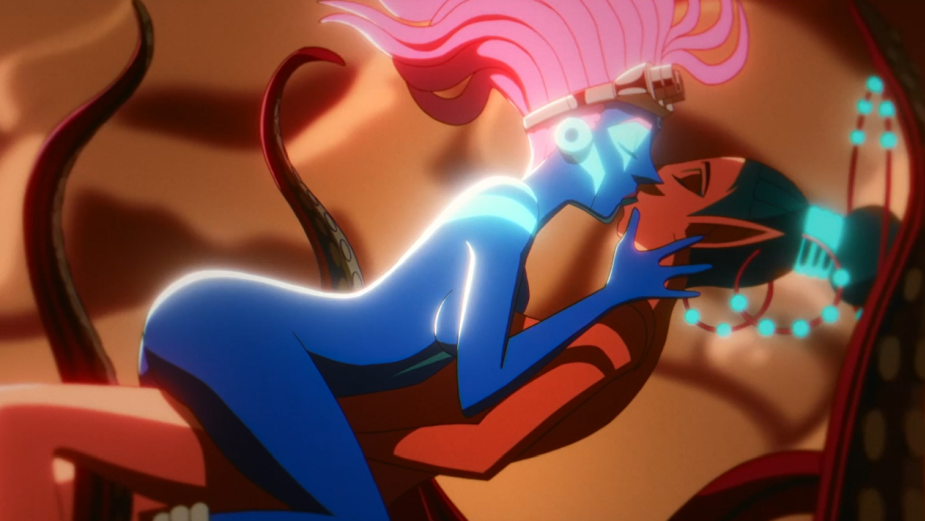
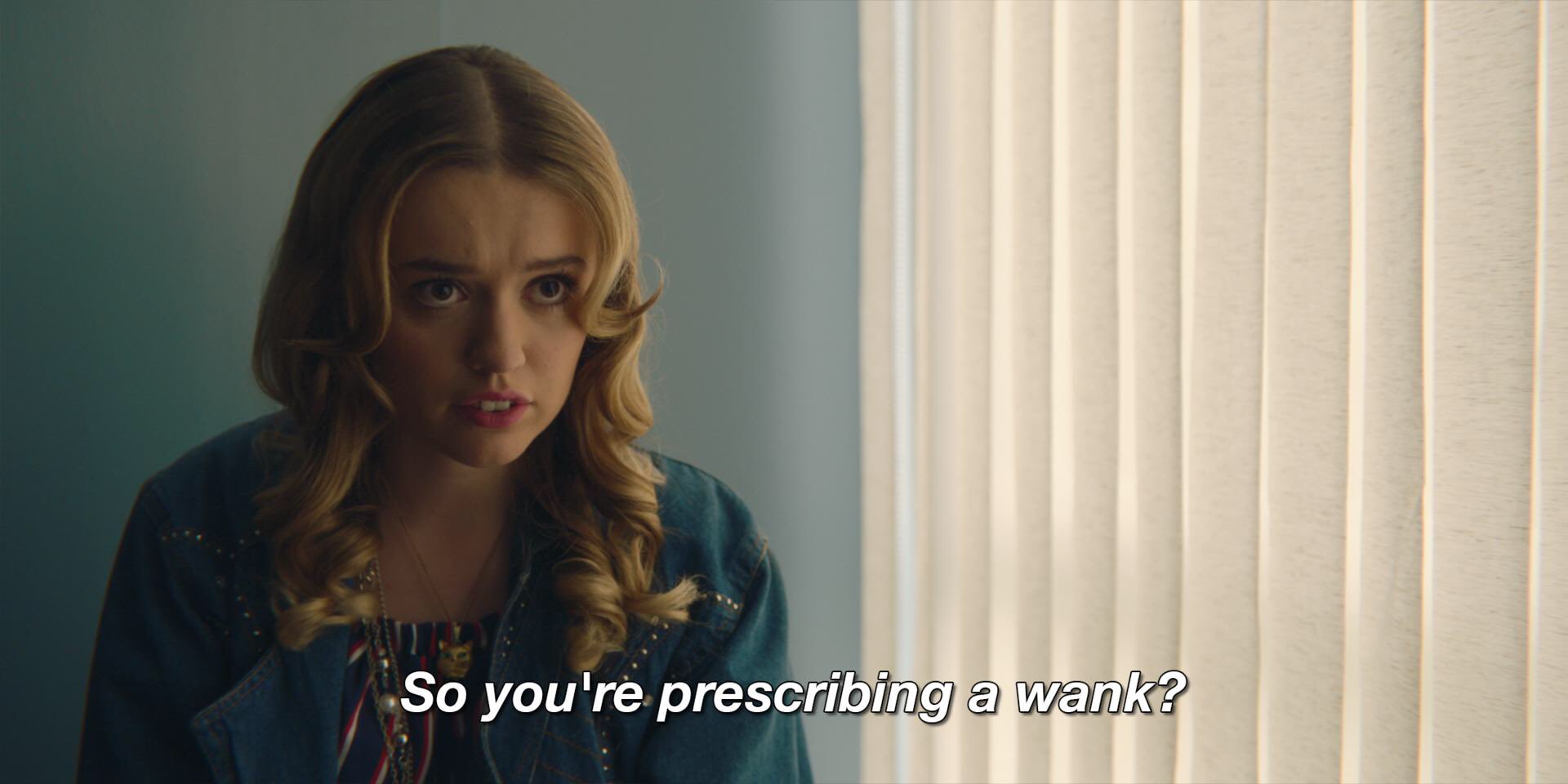
While Berlant and Warner’s argument is still compelling in a contemporary context, a significant amount of media that portrays and discusses a variety of sexual behavior has been released since “Sex in Public” was published in 1998. TV shows like Sex Education (first released in 2019), Sex Lives of College Girls (2021), and Heartbreak High (2022) all take on the task of trying to unpack the sexual lives and practices of teenagers and young adults. Sex Education, in particular, is centered around a high schooler named Otis, whose mother is a sex therapist. Otis starts a business at school where people pay him for sex and relationship advice. Under this premise, the show creates numerous opportunities to discuss a range of sexual “failures.” While many characters express embarrassment or shame around these issues, the general portrayal normalizes varied sexual preferences and difficulties. 

Lily’s alien sex fantasy (Sex Education, Season 3 Episode 7)

sex education on X: "https://t.co/r8HIzgQVf1" / X
Netflix's 'Sex Education' Star Aimee Lou Wood On Masturbation Scene That  Changed Her Life | body+soul

Aimee tries to figure out what she enjoys sexually (Season 1 Episode 6)

Sex Education offers representation of queer behaviors that viewers might not often see in other media. But perhaps more importantly, Sex Education gives examples of how to discuss sex and desire openly. By representing both the practices and the discourse around those practices, Sex Education can inspire viewers to engage in their own conversations about sex. Sex Education is not perfect by any means (can any representation really be perfect anyway?). Yet, in many ways, it is a kind of queer counterpublic, or perhaps a doorway to a counterpublic, in that it counters “the way a hegemonic public has founded itself by a privatization of sex and the sexualization of private personhood” (p. 559). The more we discuss sex openly and shamelessly, the more opportunities we have to confront the public institutions that govern it while simultaneously preaching privacy. Media like Sex Education is a nudge in the right direction. 

Categories
Uncategorized

Queer Utopia in Frank Ocean’s Blonde Album

In his Blonde album, released in 2016, Frank Ocean speaks to his own experiences with his masculinity and sexuality. His lyrics are filled with past musings and future aspirations, love, loss, hope, and pain. Frank Ocean’s lyrics can be read through the lens of Muñoz’s queer utopia in the way they imagine a future that is not yet here, something on the horizon. As Muñoz states, “Queerness is a structuring and educated mode of desiring that allows us to see and feel beyond the quagmire of the present,” a “longing that propels us onward, beyond romances of the negative and toiling in thre present,” “the thing that lets us feel that this world is not enough, that indeed something is missing” (1). 

Frank Ocean’s lyrics embody this type of active hope for a future that rejects the oppression of the present. In “Solo,” Ocean sings, “It’s hell on Earth and the city’s on fire. Inhale, in hell there’s heaven.” In these lyrics, Ocean acknowledges the brokenness of the present moment, but the potential for something beautiful to emerge from it. This lyric also speaks to Muñoz’s ideas of concrete utopias which are “relational to historically situated struggles” (3). What he imagines emerges from the current moment and is situated in reality, even when it imagines something new. It is a “heaven” that stems from the current “hell.” 

His lyrics from “Seigfried” similarly evoke ideas of queer futurity and a concrete utopia. Ocean sings, “Dreaming a thought that could dream about a thought That could think of the dreamer that thought That could think of dreaming and getting a glimmer of God I be dreaming a dream in a thought That could dream about a thought That could think about dreaming a dream where I can not, where I can not.” In these lyrics, Ocean conveys the way this dream builds upon itself, from previous dreams. Just like Muñoz’s ideas of concrete utopia, this dream for the future is “relational” and situated within a present context. 

Frank Ocean’s lyrics also speak to queerness as “not simply a being but a doing for and towards the future” (1). In the song, “Pretty Sweet,” he sings, “To the end I’ll make it All the risk, I’ll take it.” In this line, Ocean asserts a determination to achieve this future and to take the risks needed to get there. His lyrics are rich with the potentiality that is needed to achieve Muñoz’s queer utopia.